EdTech exec on education cuts and tariff uncertainty: ‘The ones getting shortchanged are the students’
Don’t let the quiet fool you at Vernier Science Education.
Though many of the desks here are empty most days, this is a reflection of the COVID-inspired work-from-home shift, not struggles at the 41-year-old company, a global leader in STEM education technology that does around $50 million in annual sales.
“Mostly, they work from home, but that’s pretty standard now,” founder Dave Vernier said last week on a tour of the company’s suburban facility.“The world has changed.”
The afternoon calm also belies major challenges related to President Donald Trump’s second term agenda.
Many of Vernier’s products — like oxygen sensors and gas chromatographers and radiation detectors — require specialized electronic components unavailable in the U.S., and now subject to steep tariffs imposed by Trump since April. Tariffs have cut into Vernier’s operating expenses and forced the company to add a 5% surcharge on every sale. And company officials say reciprocal tariffs on the U.S. have undercut Vernier’s ability to compete in the global marketplace.
A related problem is that Vernier’s customer base of schools must contend with increasingly limited budgets. This summer, the Department of Education withheld $7 billion in previously allocated funding. Much of that was eventually released though the agency’s continued existence is now in doubt.
“It’s been a challenge, but the pandemic wasn’t great either,” said Vernier, who stepped aside as CEO in 2015 but still makes it into the office several times a week. As does his wife, Christine, who ran the company alongside him since he founded it as a physics teacher in Hillsboro.
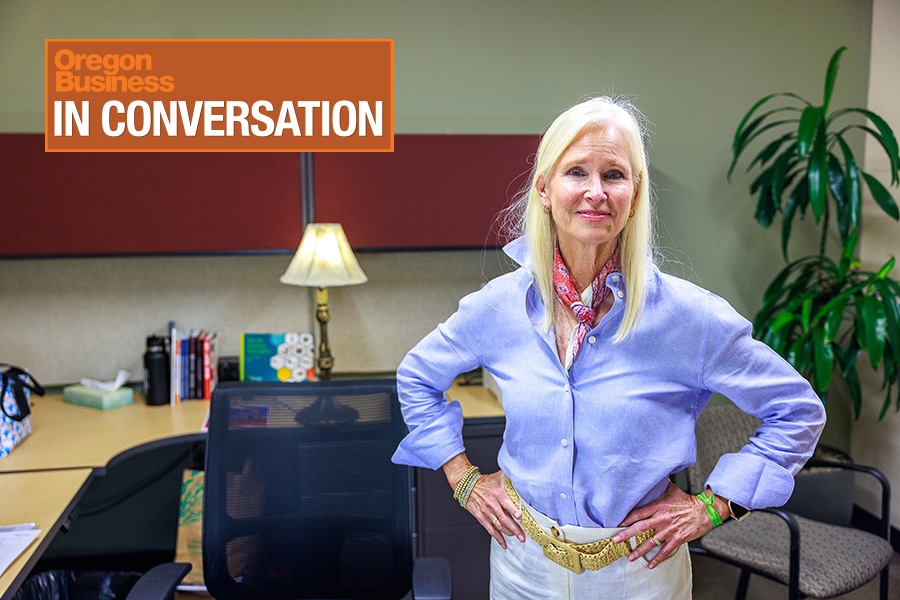
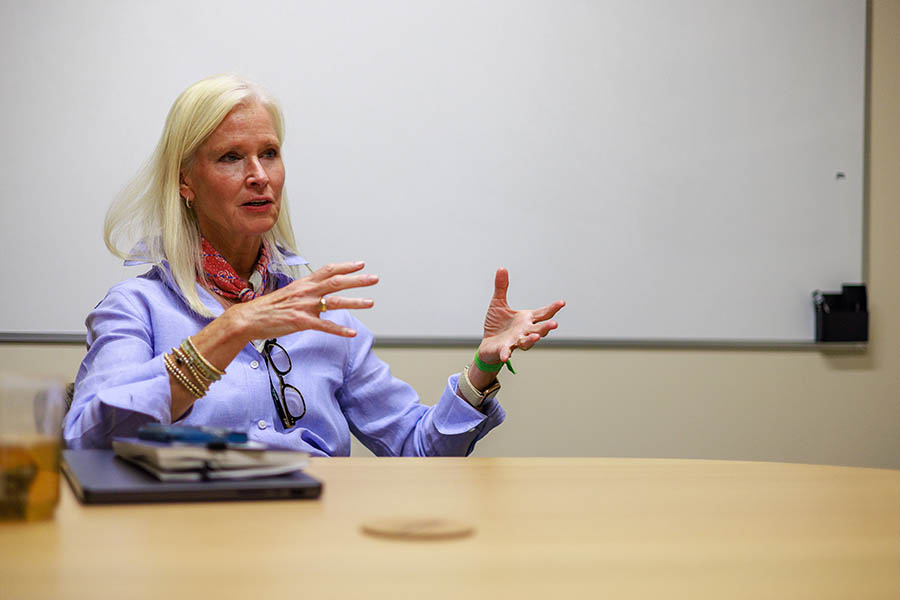
Lately, leading the day-to-day has been Jill Hedrick, who was named as CEO last year. An educational technology veteran, she’s weathered ever-shifting trade policy as well as a move by Vernier to the corporate model of a perpetual purpose trust.
Hedrick spoke with Oregon Business this week about climbing costs, rising prices and who will ultimately pay.
“I have so much confidence in our people and our ability to weather this,” Hedrick said. “We’ll just keep trying to make the best decisions we can in service to our educators. I’m not going to sugarcoat it: these things have a pretty material effect on our ability to do that in the way we want.”
This conversation has been edited for length and clarity.
What has the massive reimagining of federal education and trade policy meant for your company?
Well, [federal] funds average only about 10% of any school system’s budget. But it’s really been the uncertainty.
At first, we saw a bit of a pause [in purchasing] as districts thought about things like, “When will funds be released? Will there be strings attached? Can we meet those requirements?” We saw those kinds of questions really influence decision-making.
School districts work on an academic budget cycle, from July to June. Typically, federal funds are released on July 1. And on June 30 this year, the Department of Education communicated that about $7 billion would be frozen pending some review. And this really caused some disruption. There wasn’t enough time for any school system to plan. They didn’t know how much they’d be receiving, or how long it would take. And for school districts that start school in August, there certainly wasn’t enough time to plan. So we certainly saw an impact from that.
On the manufacturing side, where do Vernier’s components come from?
We manufacture primarily in the U.S., and much of our manufacturing is right here in Beaverton. And we source components from all over the world. Many of those components come from China. We have some specialized batteries, we have some specialized chips that are only manufactured in China. They’re not available in the U.S. and they’re not available in other markets.
So when there are changes to tariff policy, that has a pretty significant impact on us. The fluctuation in prices impacts our ability to retain the pricing that we want to offer. We want teachers and educators to have access to our products at a price point they can afford.
School systems and most higher ed institutions operate on fairly fixed budgets, and those are often based on the tax base. Of course, federal funding is also a part of that, and it depends on what part of the country you’re in and the socioeconomic profile of your students.
So any increase in tariffs means our landed cost has a profound impact on our margin structure, which means there has to be a change in our price. So that is passed on to the buyer. As a business, we have a little bit we can absorb. But for the most part, we are not operating with a big enough margin, with hardware development, to be able to absorb it.
You mentioned raising prices. Are you considering layoffs or delaying plans for growth, things like that?
We have no plans for layoffs. As you may know, our corporate structure is now a perpetual purpose trust. As a trust-owned business, we have the ability to really play the long game. And by that, I mean, our trust charter says that we will meet the tenets of the trust. And one of them deals with financial sustainability.
So we’re paying really careful attention. We want to be around for a long, long time, so we try to make very wise decisions. But we also have the ability to make some investments that we know will come to fruition in two or three years’ time.
But the other obligations we have are to educators, to our employees and to the community. And we are very committed to sustainability practices …
As a trust-owned organization, we are able to make some choices that might be different if we were a private equity-backed organization or a publicly traded company, which has a different kind of obligation to its shareholders. We’re really about preserving a legacy and ensuring that we live our mission.
Who are your main competitors?
There are a couple companies in the U.S. that sell to roughly the same customers. There’s a company in Northern California called PASCO. There’s another company that works mostly with elementary-aged kids called PocketLab. And then globally there are companies in Germany and the UK and China that we see. But this is a big enough market for there to be healthy competition, and that’s certainly what we see here in the US.
So as you respond to tariffs with higher prices, do you worry about losing market share to foreign companies?
That’s 100% a concern of ours. So, a good example is in Europe. There’s a German company called Fine — high quality products, really good. And when we sell in the European market, we’ll be constrained. They will be able to offer more competitive pricing.
Setting aside Donald Trump, what was the situation like before the 2024 election? How were things looking in the field of science education?
Last year was interesting for two reasons. One was that stimulus dollars from the pandemic — known as ESSER funds — needed to be obligated by the end of September 2024. So we knew that districts were spending those funds, and working in that time frame. And we knew that there would be an impact post-ESSER, and that districts would go back to more traditional sources for purchasing pretty much everything — from technology to software platforms to school buses.
That was one impact that we saw last year. The other was that the two presidential candidates offered very, very different visions for education. So there was uncertainty there that impacted us. What we saw in the EdTech world is concern that if the Trump administration came into power, that we’d be looking at the kind of disruption that we’ve seen, both from the tariff perspective, but also with the elimination of the Department of Education.
And we’re concerned that if the money the federal government has traditionally provided is now dispersed by the states, that there might be more strings attached. We just want to make sure that the same funding that was expected at the federal level, is used with fidelity at the state level.
As a PPT in the education field, how do you set your prices?
First of all, we have 40 years of history with pricing products, so we have a good sense of what the market will bear. But further, we don’t price for the highest that someone would pay. We want our products to be affordable to as many educators as possible. It’s very important for us that educators can afford our products.
Look at it this way. Say you have a biology lab and you have a certain amount of money to spend on equipment. If the price of equipment goes up, you can’t buy as much of it.
So what does that mean? Well, if you have to buy half of what you thought you were going to have, now you’ve got maybe six or eight or 10 kids in a work group. It’s going to be really different from the experience of having the equipment one-to-one or one to just a few kids.
It’s math, right?
So from my perspective, this is where we see a disconnect. The ones getting short-changed are the students. They’re the ones that suffer.
Click here to subscribe to Oregon Business.