
How Oregon workplaces work in 2025
In the fall of 2020, Oregon Business approached a variety of business leaders with one big question: What is the future of work? The results, published in the January 2021 Power Book, reflect a swirl of uncertainty. Most Americans did not have access to the COVID-19 vaccine, and case counts (along with rates of hospitalization and death) were still high. Some offices remained remote-only; others had reopened. Essential businesses that hadn’t been able to shut down — like factories and hospitals — adapted to constantly shifting COVID protocols, as did businesses like restaurants that had shut down and reopened with new safety measures in place.
As we made plans for this issue, it hit us: The future is now. We reached out to the people we spoke to in 2021 — or the institutions that had employed them, as several of our interview subjects had moved on to new roles — and asked how things were going.
OHSU
OHSU is still embracing telehealth and remote work but faces economic and political headwinds. In November 2020, Danny Jacobs, then president of Oregon Health & Sciences University, told OB that 39% of OHSU’s workforce was working remotely, up from 4% a year before. Telemedicine appointments had increased by 800%. He predicted a 2% year-over-year workforce increase and said the shift to remote work was saving the institution money.
In the years since that conversation, the institution has undergone a series of big changes. Jacobs announced his retirement in October 2024; the institution has contended with rising costs and last summer announced plans to lay off more than 500 staff to balance its budget. The Oregon Health Authority is also reviewing OHSU’s plans for a $1 billion merger with Legacy Health Systems. The state could approve the merger, announced in 2023, as early as this summer.
Despite last year’s drop in headcount, OHSU is still one of the state’s largest employers, with 21,300 people on payroll, according to the latest numbers published by the health system. According to OHSU spokesperson Erik Robinson, as of January 2025, about 22% of all OHSU ambulatory visits are done via telemedicine, compared to 26% in November of 2021; prior to the COVID-19 pandemic, telemedicine accounted for less than 2% of appointments in the health care system. About 25% of OHSU’s employees engage in some form of remote work, either hybrid or fully remote, with the number of fully remote employees “generally holding steady,” Robinson wrote in an email to OB.
“…We also have the practical consideration of limited parking and building space. Remote and hybrid work helps ensure that limited parking and building space is available for patients, employees and learners who must be on campus.”
— OHSU spokesperson Erik Robinson
“In addition to supporting flexible work options to reinforce work-life integration and retain our valuable employees, we also have the practical consideration of limited parking and building space. Remote and hybrid work helps ensure that limited parking and building space is available for patients, employees and learners who must be on campus,” Robinson wrote.
OHSU is also facing threats in the form of potential funding cuts from President Donald Trump, who at the beginning of February issued an executive order that would have placed an immediate block on all federal funding. That move endangered research at OHSU, which received $388 million in funds from the National Institutes of Health in 2024. Oregon attorney general Dan Rayfield joined AGs from 21 other states in suing to block the cuts, and in mid-February a federal judge did just that. That block remained in place by the time this issue went into production in late February, the pause had been extended, but the future of research funding was in question.
“Research is a foundational pillar of what makes us an academic health center, and we must do all we can to protect it,” interim president Steve Stadum said in a February statement.
Meyer Memorial Trust
Meyer Memorial Trust has moved into its new space, embracing hybrid work and a community co-working model. In 2020, Meyer Memorial Trust’s then executive director Michelle J. DePass told OB she was looking forward to returning to the office in the foundation’s new building, situated at the intersection of North Tillamook and Vancouver streets in Portland. The foundation announced its purchase of the land in 2018; construction was completed in October 2020, when COVID protocols were still in place, preventing staff from reporting to work in the new space.
According to president and CEO Toya Fick, who stepped into her role in September 2022, the organization’s 40 employees have since returned to the office on a hybrid model.
“We have no plans to change,” Fick wrote in an emailed statement to OB. “Our office is open five days a week, and we ask that our team make it a priority to be in office Tuesday-Thursday. We find that the hybrid model provides our staff with the flexibility to balance their obligations to work and home. We are incredibly blessed to have a beautiful, modern building to work in, and I think that really does make a difference.”
Fick also noted that the building includes a co-working space, which lends some office space to a grantee with a temporary need, as well as what the organization calls the Center for Great Purposes, which the organization shares with grantees for all types of meetings, convenings and celebrations. “Opening our doors to community is one way that we support ‘beyond the check,’ and we’ve had great response to that offering,” Fick wrote.
Meyer Memorial Trust has in recent years announced changes to its strategic framework to use an “antiracist, feminist lens” in funding decisions and to emphasize not just equity but justice, with Fick telling OB in 2022, “Equity is like a level-101 college class. Justice is the doctorate level.” As this issue went into production, the second Trump administration made good on promises to cut DEI programs in the federal government, and a number of large private-sector businesses have followed suit, with large companies like Target and Walmart canceling DEI programs. Anti-DEI backlash has affected the world of philanthropy, at least at the federal level, with the National Endowment for the Arts canceling small grants to underserved communities and placing restrictions on which types of organizations it would fund.
Meyer Memorial Trust is a private foundation whose initial investment came from the estate of the late grocer Fred Meyer, but Fick is paying close attention to the chaotic political climate. “Politically, it’s pretty obvious that things are shifting rapidly and that much of what is changing at the federal level is not aligned to Meyer’s mission, values or what we know is needed to improve things here in Oregon,” Fick wrote to OB. “Our greatest concern in this moment is to make sure that our nonprofit community is supported and resourced. So we’re in close conversation with organizational leaders to identify any gaps or delays in funding that may result.”
Fick also said the institution wants to “defend and protect philanthropic freedom, so that funders have the ability to do their work effectively,” and to be more proactive in telling the stories of success, including the data that drives its strategy and approach to grantmaking. “We have more work to do to build understanding of the strengths that a diverse and inclusive culture brings to all of us, whether you’re a private foundation, as we are, or a business, or academic or government institution.
“One thing that I’m really lucky to have is an intensely mission-driven, highly motivated team. Meyer staff are here to make a difference in the lives of Oregonians. For that I’m grateful, even as we’re entering challenging political times,” Fick wrote.
Cushman & Wakefield
Cushman & Wakefield is back in the office. Mostly. In the fall of 2020, the commercial real estate services firm had shifted to a hybrid model, with then managing principal Jason deVries saying he didn’t see the company going 100% remote anytime soon.
Four years on, Cushman & Wakefield’s employees are back in the office most days, but the firm has built some flexibility into job descriptions.
“We’ve learned so much since those early days of the pandemic, now roughly five years ago, and we continue to learn more every day. One thing that we have taken from this unparalleled experience is the critical importance of in-person interaction and development and worker well-being. This is especially important to our new employees and new brokers we’ve onboarded since that time. While their expectations and experiences are a bit different than pre-pandemic culture, a constant we see is our new employees craving an understanding of how to succeed and ‘learn on the fly,’” says managing principal Alison Beddard. As of January 2025, Cushman & Wakefield’s corporate policy requires employees to report to the office at least three days a week, and management expects four to five in-person days for roles that require in-person responsibilities. “We were prepared for distributed work (including remote work) before the pandemic and have leaned into strengthening our corporate teams, so we have both at the company. This has provided us with an efficient and effective model to best serve our clients through this relatively new normal,” Beddard wrote.
“We have a great example of an experience this past year,” she added. “We offered our C&W internship program and fielded candidates for Seattle and Portland. We had two interns identified from Seattle and one from Portland. Our office in Seattle was space- constrained and not able to accommodate the interns in person. Had we hosted the interns in Seattle, they would have had to have worked more remotely. But in Portland, we have a beautiful, inviting office experience and room to grow. Our Portland brokerage team was enthusiastic and ready to engage with the interns. We first asked if the interns would be willing to all locate in Portland over the summer so that we could drive the in-person experience as we knew it would be an important factor to their experience and learning journey. They all agreed to the location, and the program worked out great.”
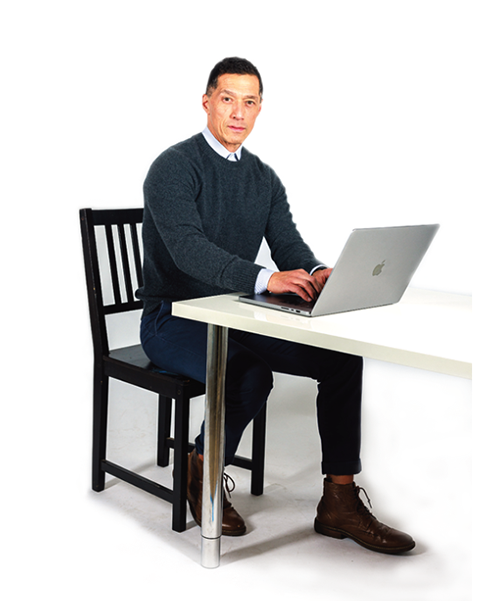
Commercial real estate isn’t the easiest business to be in in 2025. While Cushman & Wakefield staff are back in the office, many companies downsized or gave up their offices altogether — in downtown Portland and elsewhere. But Beddard says Portland’s high vacancy rates aren’t the whole story.
“While office vacancy in downtown Portland is at a record high, the suburbs continue to attract tenancy,” Beddard wrote. “It’s important to point out that office space is still leasing and will continue to evolve in both submarkets. It’s also important to think about the impact of the office experience and how landlords can set themselves apart to deliver an enjoyable and attracting tenant experience.”
She also notes that office-vacancy rates were high before COVID hit, with a “glut of office vacancy” and many offices headed toward redevelopment or reimagination. “That category hasn’t recovered, and some would say it isn’t coming back. That has created an over-emphasis on how we interpret the vacancy impact. The city of Portland also serves as an important partner in creating a safe, walkable environment that is tenant- and employer-friendly. There is so much opportunity here in driving a portfolio mix that engages live-play-work for years to come,” Beddard wrote. “We expect to see more positive activity in 2025 as tenants have a better handle on their plans and as lease expirations roll. We are in fact seeing a trend of tenants committing to longer-term leases to accommodate the needs of their employees as well as their business.”
The Standard
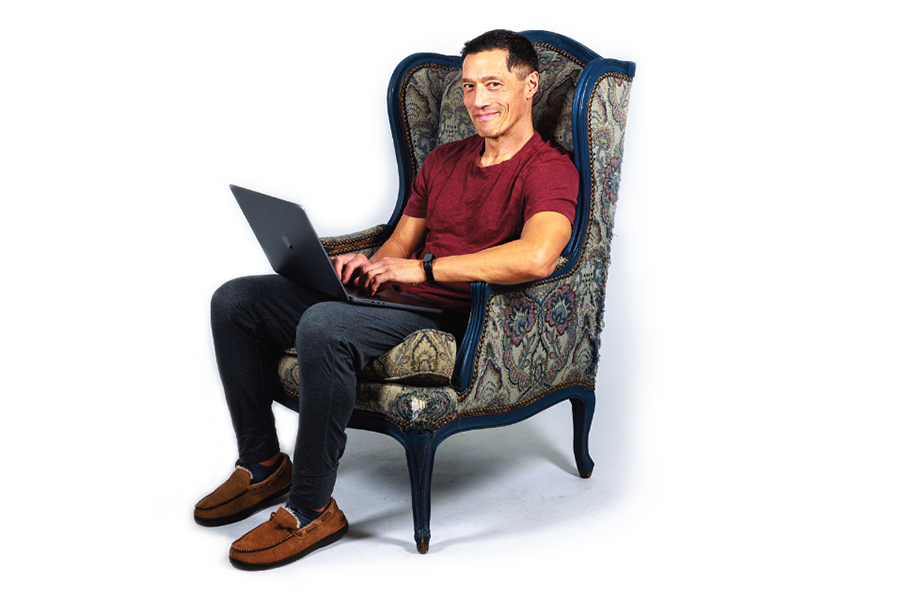
Financial-services firm The Standard is still mostly remote — but committed to downtown Portland. In November 2020, J. Greg Ness, CEO, told OB almost all of the 3,000 employees of The Standard were working from home. Ness retired in 2021 and was succeeded by Dan McMillan.
“Most of our 4,200-plus employees are working remotely today,” McMillan wrote in an email to OB. “During COVID in 2020, we realized most positions can be filled by people who live anywhere within the United States, which oftentimes places them closer to our customers.”
Some roles do require daily or hybrid in-person schedules, and the company does have regular on-site meetings and gatherings at its headquarters, McMillan added. In fact, last year The Standard kicked off a multiyear renovation of Standard Plaza “to support a variety of work needs and collaborative meetings.”
“We believe that our commitment to a flexibility-first approach creates a competitive advantage, putting The Standard in a favorable position for attracting and retaining the best talent across the country. There are no plans to shift to a different model.”
— Dan McMillan, CEO, The Standard
“We believe that our commitment to a flexibility-first approach creates a competitive advantage, putting The Standard in a favorable position for attracting and retaining the best talent across the country. There are no plans to shift to a different model,” McMillan added.
McMillan described 2024 as “an exciting year of unprecedented growth and change alongside strong financial performance,” and noted that the firm has made three strategic acquisitions in the past two years. At the end of 2022, The Standard acquired the retirement-plans recordkeeping business from Securian Financial, and it closed a deal to acquire the life and disability business from Elevance Health in April of last year. A third deal to acquire the employer voluntary benefits business from Allstate was announced last summer and is due to close in August. That deal, McMillan wrote, will add 1,000 more employees and a “big book of business” to the company.
In 2023 McMillan worked with Gov. Tina Kotek to develop a plan to revitalize downtown Portland, calling for a ban on public drug use and an expansion of homeless-shelter capacity.
On the current state of downtown, “we feel things are moving in the right direction,” McMillan wrote. “Crime is down since the pandemic. The city is a lot cleaner. There are more people everywhere, particularly on the weekends but also on weekdays. Hotels are hosting more guests. Concerts, festivals and nonprofit events are back. More employees are back during the workweek and we expect to see those numbers increase this year. We still have a long way to go, but I’m encouraged by what we’re seeing now.”
Gensler
Gensler is back at work. In 2020 John Wix, then managing director at Gensler, the Portland-based architecture and design services firm, said the hybrid workforce would be a “model of the future.”
“Gensler has shifted away from the hybrid model to an in-person model. We do have hybrid capabilities and continue to use that option to provide flexibility to staff, teams and our clients,” managing director Maurice Reid wrote in a statement to OB.
“Our shift to prioritize an in-person model was made because being together on a daily basis leads to a much better office culture, and we see better work outcomes. Face-to-face interaction provides immediate and spontaneous opportunities for understanding, feedback and learning,” Reid added. “These outcomes may be more subjective in comparison to measurable goals like efficiency and productivity, but we find that without these interactions, our design and business culture goals are difficult to achieve. Our profession is intensely collaborative, and with hybrid-first models, the results are simply not as good.”
“Our profession is intensely collaborative, and with hybrid-first models, the results are simply not as good.”
— Maurice Reid, managing director, Gensler
But, he added, the firm does continue to take advantage of hybrid tools that help staff manage unexpected challenges, like snow or school-day cancellations.
“While we remain committed to in-person work, we continue to assess and refine our work practices to support hybrid options. This is a necessity because we are often traveling for projects, collaborating with other offices, and are always meeting our clients and partners where they are, which is often in remote or hybrid locations. It’s exciting to be in the business of designing workspaces at this moment when there is so much evolution in mixing physical spaces with new technology and process,” Reid wrote.
Editor’s Note: This article has been updated to correct Toya Fick’s title.
Click here to subscribe to Oregon Business.