
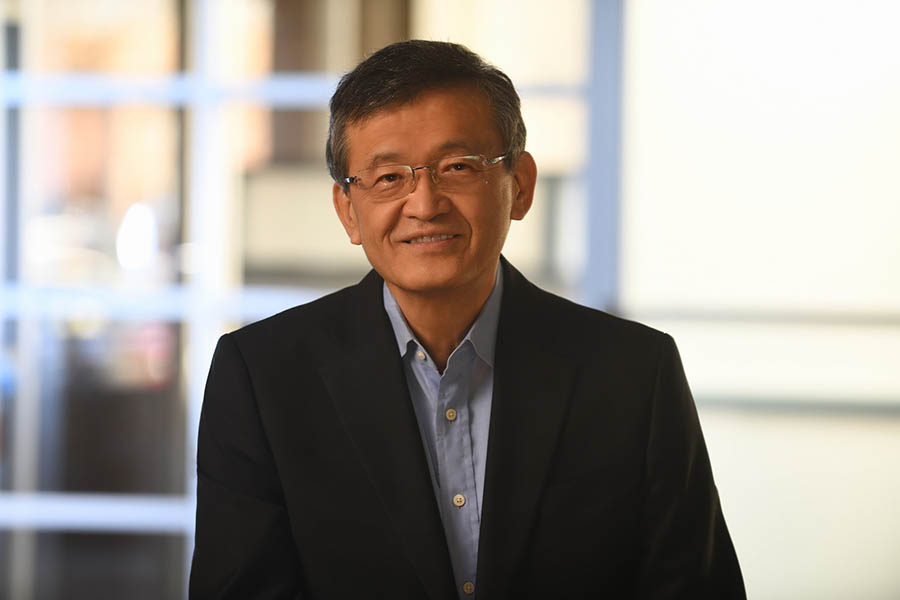
With the appointment of Cadence’s Lip-Bu Tan, the struggling chip-maker hopes to spark a turnaround.
Intel has chosen a prominent tech investor and semiconductor industry vet to lead the company, which has struggled to adapt to the AI boom and other disruptions.
On Wednesday, the once-dominant Hillsboro-based chip manufacturer announced its board of directors had selected Lip-Bu Tan, a venture capitalist with deep ties to the semiconductor industry, including many Asian startups.
From 2009 to 2021, Tan, 65, ran Cadence Design Systems and is credited with a major turnaround that doubled the company’s revenue.
“In 2009, Cadence was in trouble, and Lip-Bu led Cadence out of trouble,” said Morris Chang, CEO of main Intel rival Taiwan Semiconductor Manufacturing Inc., in a video tribute. “In the last seven years he has made it a very strong company.”
The AI boom of the past several years has seen a shift away from central processing chips like those Intel creates. A plan by former CEO Pat Gelsinger to move into contract manufacturing failed to attract customers. The company announced layoffs of 15% of its global workforce as it lost market share to rivals like Nvidia, which last year supplanted Intel on the Dow Jones Industrial Average.
In December, the company’s board reportedly pressured Gelsinger to resign after his plans to revive the company stalled. The last three years of Gelsinger’s tenure saw the company’s value decrease by three times and the company, from looking for companies to acquire to becoming an acquisition target itself, according to a chronicle of Intel’s decline in the Wall Street Journal.
Tan was born in what is now Malaysia and raised in Singapore.
His first day as Intel chief is Tuesday.
“I am honored to join Intel as CEO,” Tan writes in a statement. “I have tremendous respect and admiration for this iconic company, and I see significant opportunities to remake our business in ways that serve our customers better and create value for our shareholders.”

Tan succeeds interim co-CEOs David Zinser and Michelle Johnston Holthaus. The co-CEO arrangement fueled speculation Intel might split into two companies with its chip design and manufacturing divisions going separate ways.
With Tan at the helm, Zinsner will stay on as executive vice president and chief financial officer, and Johnston Holthaus will remain CEO of Intel Products.
Tan served on the Intel board of directors until August. He will rejoin the board, the company announced Wednesday. Tan is currently on the boards of Schneider Electric and Credo Technology Group. He’s previously served on the boards of Hewlett Packard Enterprise and Silicon Valley investor SoftBank.
He was an early investor in major Chinese chip maker Semiconductor Manufacturing International and is a founding managing partner at venture capital firm Walden Catalyst Ventures and chairman of Walden International. Tan was inspired to name the company after the work of humanist writer Henry David Thoreau, who wrote “Walden; Or, A Life in the Woods.”
Through Walden, Tan has invested heavily in Chinese tech companies that compete in semiconductors and AI. His extensive ties to China have made him the subject of scrutiny from Congress. A special House committee on the Chinese Communist Party found “serious concern” with Tan’s investment in Chinese companies blacklisted by the Commerce Department for human-rights abuses.
WSJ reports that a venture capital firm founded by TanWalden Capital made at least 25 investments in Chinese chip companies from 2017-2020, which is more than 40% of the Chinese chip deals that involved U.S. investors in that time.
Tan has a bachelor’s degree in physics from the Nanyang Technological University in Singapore, a master’s degree in nuclear engineering from the Massachusetts Institute of Technology and an MBA from the University of San Francisco.
He’s an elder in his local church, the First Presbyterian Church of Berkeley.
Click here to subscribe to Oregon Business.