
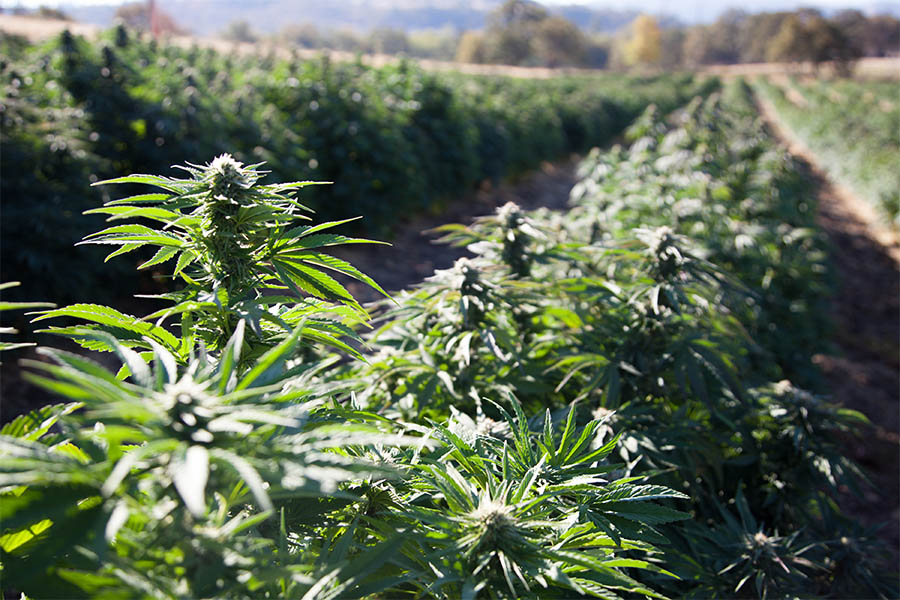
The massive yield — caused by hot, dry and smoke-free conditions — is a blessing and a curse for the state’s beleaguered cannabis industry.
Oregon set a new annual outdoor harvest record for marijuana this year.
The Portland Business Journal reports growers are pleased with the yield but face difficulties offloading so much product in a market that’s only partially recovered from historic low prices over the past two years.
Oregon pot growers reported 4.54 million wet pounds of marijuana harvested at outdoor farms in October, the peak of the annual growing season, according to the Oregon Liquor and Cannabis Commission. That’s more than 200,000 in excess of the previous record, set in 2021. Total production, a figure that adds in indoor and mixed-light facilities, for October was 5.71 million pounds, another Oregon record. And with two months remaining in the year, total production for 2024 is 11.14 million pounds, which also beats the total set in 2021.
This year’s harvest is already 16% bigger than all of 2023 and 29% larger year-to-date.
Known in the business as “Croptober,” the month of October is when producers harvest the bulk of their production.
Factors for the big harvest include dry, hot and smoke-free conditions in Southern Oregon, the heart of Oregon outdoor cannabis production. Smoke from wildfires can limit light reaching plants, which reduces yields. Mason Walker, CEO of East Fork Cultivars, is quoted as saying the yield was especially good in September, when flower development occurs, calling the result a “dream season.”

In Oregon, the pandemic fueled a demand that caused growers to plan more marijuana than the state’s market could support. Production spiked in 2021 but demand faded, which led to stockpiling of wholesale supply and falling prices. As a result, harvests have been smaller in recent years and consumer prices have remained flat.
The wholesale price of marijuana, meanwhile, is inching back up. In October, it was up 17% over 2022, though still down 33% from 2021 and 50% from 2022. In 2022, Portland had the cheapest pot of all major U.S. cities and some of the cheapest prices in the world, at $7 per gram.
Federal law requires growers to sell their product only in states where it was produced. When Oregon became one of the first states to legalize recreational marijuana in 2014, regulators set few restrictions on the number of new business licenses awarded. This led to problems of over-supply and excessively low prices. But today, Oregon has fewer marijuana business licenses, which is expected to help farmers during the new glut by keeping the price range smaller and closer to cost.
For the past two years, the price of pot has been too low in Oregon to support a healthy ecosystem for the industry. This has caused many businesses to fail or flee to other states. And marijuana businesses that don’t work directly with marijuana plants — i.e., non-plant touching or ancillary businesses — often have it more difficult, as their consumer base consists primarily of plant-touching businesses.
Click here to subscribe to Oregon Business.