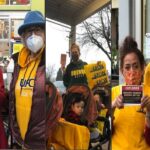

Portland-area union members allege workplace violations, rescind their endorsement of a planned Albertson’s-Kroger merger.
Around 4,500 Portland-area Fred Meyer employees might be days away from walking off the job.
Employees belonging to United Food & Commercial Workers Local 555 voted last week to authorize a strike for alleged unfair labor practices following several rounds of unsuccessful contract negotiations. Members went further and rescinded their endorsement of a planned merger involving the grocery chain’s parent company, Cincinnati-based Kroger, the nation’s largest supermarket chain.
Union reps will meet with management Friday for a fourth round of negotiations after which they’ll have a better idea if a strike will occur, UCFW spokesman Miles Eshaia tells Oregon Business.
“Right now, we’re just not seeing what we need to be seeing,” Eshaia says.
The last labor action involving UFCW workers at Portland-area Fred Meyer stores was a one-day strike in 2021.
Since then, the union has continued to push for wage increases. Eshaia says Fred Meyer proposed funding an increase and bonus by dipping into health insurance savings and allowing third-party vendors to perform the work of produce clerks. This led Kroger to release a statement earlier this month, “Fred Meyer Delivers on Their Promise to Accelerate Associate Wages,” which Eshaia says angered union members. In response, UCFW members voted to authorize the strike.
Local 555 also filed grievances with the National Labor Relations Board alleging Fred Meyer has refused to process grievances according to its own policies and has failed to provide demographic information necessary to bargain for a fair contract.
If a strike occurs, it will have a designated start and end date. During the 2021 strike, Fred Meyer attempted to keep stores open with temporary workers.
Calls to Fred Meyer’s corporate office in Portland were not returned.
Over the past two years, Kroger has seen sales fall as customers tighten their spending. But overall, supermarket sales have surged since the pandemic began as food makers have raised prices citing higher costs for employee wages, fuel and ingredients.
In late 2022, Kroger announced a $25 billion plan to merge with Boise-based Albertsons Companies — a deal that would combine the country’s two largest grocery chains by store count. The companies have said the proposed deal would strengthen unionized supermarkets and better position both chains to compete with retail giants Amazon and WalMart, which have made inroads in the grocery business, according to the Wall Street Journal.
UFCW 555 was one of the only locals in the country to publicly support the merger. But UCFW reps claim Kroger’s actions caused the union to rescind its endorsement.
“We felt like (the merger) made sense, but we saw signs at the bargaining table that they’re making some massive promises and we’ve not seen them follow through,” Eshaia says.
The merger is currently on pause, pending several attempts by antitrust officials to block it. The Colorado attorney general sued in February to kill the deal alleging the transaction would reduce competition and harm workers, suppliers and customers. The Federal Trade Commission has filed a separate lawsuit in federal court in Oregon alleging the merger would raise food prices and inhibit workers’ ability to bargain for pay raises.
A hearing in the Oregon case will be held early next week. The trial phase of the Colorado case is scheduled to begin Sept. 30.
Click here to subscribe to Oregon Business.