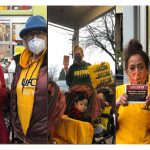

Union members protest Portland-based grocer as federal trial to stop merger occurs downtown. New Seasons workers stage an unrelated 1-day strike.
Thousands of Portland-area Fred Meyer employees returned to work this week following a six-day strike and called for a boycott until their grievances are addressed in a new contract.
Members of United Food and Commercial Workers Union 555 and representatives of Fred Meyer’s parent company, Kroger, head back to the bargaining table Sept. 11 and 12, after which workers could return to the picket line, a union rep told Oregon Business.
“It’s possible because membership has authorized (a strike) and that vote is still in effect,” says union spokesman Miles Eshaia, who called the strike that lasted Aug. 28 to Sept. 3 a success.
“We wanted to make sure management was aware how strong our membership is. It demonstrated the incredible strength of our union, the company was held accountable and our message was heard,” Eshaia tells OB.
The union’s demands include a wage increase and one-time bonus. According to the union, management’s offer was detrimental to the employee healthcare plan and some employees.
A Fred Meyer spokesperson said the company pays an average hourly wage in the Portland area of $20.98. With benefits factored in, that rises to $27.28.
“Since 2021, we’ve increased associates’ average hourly wage by nearly $4,” spokeswoman Rachel Hurst wrote to Oregon Business. “Our latest proposal seeks to add another $3.50 over the next three years, demonstrating our commitment to our unionized workforce.”
Fred Meyer stores remained open during the strike but employed measures to deal with the strike. Most stores were staffed exclusively by managers and open for fewer hours and with limited entrances and check stands.
The strike played out as a trial that could determine the fate of the company occurred in downtown Portland. Kroger, which runs several other regional grocery chains in the U.S., is attempting to purchase rival Albertson’s for $25 billion. Together they’re the two largest supermarket chains in the U.S. In February, the Federal Trade Commission sued to block the merger in federal court, alleging the deal would lead to lower employee wages and higher prices. Twelve states signed on to the lawsuit or filed one of their own, Willamette Week reported. The companies have said they need to merge to compete with Amazon and Walmart, which have made inroads with online grocery sales.
Eshaia said the timing of the strike was not related to either the trial or the Labor Day holiday, typically a high-sales weekend. The union didn’t organize any demonstrations near the federal courthouse, but did send a press release announcing that its president, Dan Clay, would give a statement on the courthouse steps after his testimony in the trial.
Fred Meyer president Todd Kammeyer released a statement prior to the strike.
“Protecting our associates’ right to collectively bargain is why it is so important to secure the future of unionized grocery stores in America, and that is exactly what Kroger’s proposed merger with Albertsons will do,” Kammeyer wrote. “If the merger is blocked the only winners will be non-union food retailers such as Walmart, Costco and Amazon.”
On Sunday, around 1,100 employees of regional grocery chain New Seasons staged a one-day strike at 10 of 11 Portland-area stores. The independent New Seasons Labor Union is pushing for a living wage of $27.04/hour, regular cost of living adjustments and other demands. Like the UFCW, it has filed complaints of unfair labor practice with the National Labor Relations Board. Talks between the NSLU and management recently broke down after two years of bargaining, the Oregonian reported.
Editor’s note: This story has been updated to include comments from Fred Meyer.
Click here to subscribe to Oregon Business.