
The 2020 wildfires devastated Oregon’s wineries. A Newberg winery turned its spoiled grapes into stronger stuff — but they say another bad fire season will wipe them out.
Starting on Sept. 7, 2020, the smoke poured into the fertile Willamette Valley: a toxic mix of heavy gases, soot, metals and other pollutants that covered and infiltrated all it touched.
A historic windstorm had combined with hot, dry conditions to fuel five simultaneous “megafires” around Oregon. More than a million acres burned in only a few days.
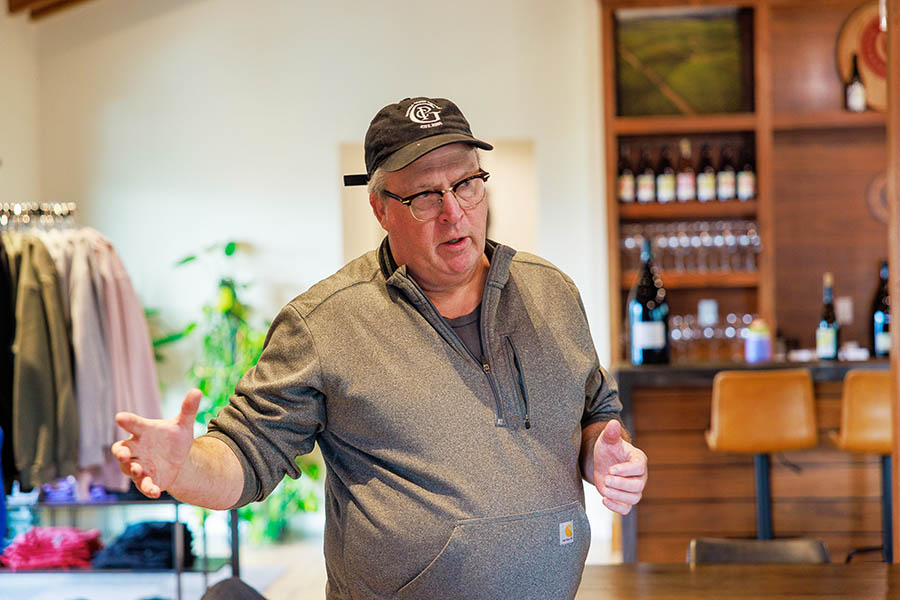
Wine grapes are especially susceptible to smoke. The compounds in it bind to sugar molecules during fermentation, resulting in bitter, undrinkable wine. But the really sinister thing about smoke and grapes, according to Jim Anderson, owner of Patricia Green Cellars in Newberg, is that the level of damage isn’t known until fermentation.
A day after the fires began in 2020, Anderson and his team started picking what they could. He had contracts to fulfill — agreements that made no exception for smoke damage. Weeks later, after fermentation, he assessed what he had. About half that year’s vintage could be salvaged. He’d need to use every winemaking trick he knew and sell the result on his second label for half the price of a standard Patty Green pinot. But the remainder of the 2020 vintage — around 12,000 gallons of pinot noir — was, to his mind, ruined.
“Anything picked after the 10th of September was pretty much shot in some way,” he tells Oregon Business. “Some of it was just hell on wheels.”
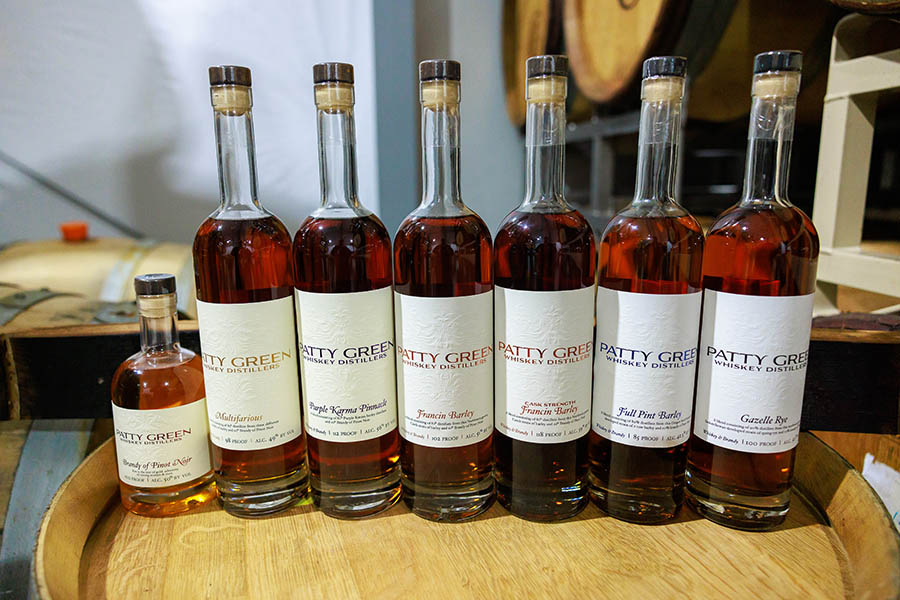
Wildfire smoke from 2020 cost the wine industry $3 billion, according to a 2021 estimate published by the market research firm bw166. Patricia Green Cellars met the moment with a creative pivot that helped the business claw back some revenue and establish lines of two drinks Anderson never imagined he’d produce: brandy and whiskey.
“I don’t like sweet things that much in general,” Anderson says. “I drink dry wines. I make dry wines. So to have a whiskey that fits in with that palette, that profile of things that I like, has kind of turned me off to other American whiskeys.”
Winemakers are loath to toss any amount of product unless it’s totally unsalvageable. In Europe and California, producers sometimes sell smoke-tainted wine to major manufacturers to be blended into large batches. It can be used in fertilizer or made into food products, like red wine vinegar or the pinot barbecue sauce Durant Vineyards in Dayton made from 2020 smoke-spoiled grapes.
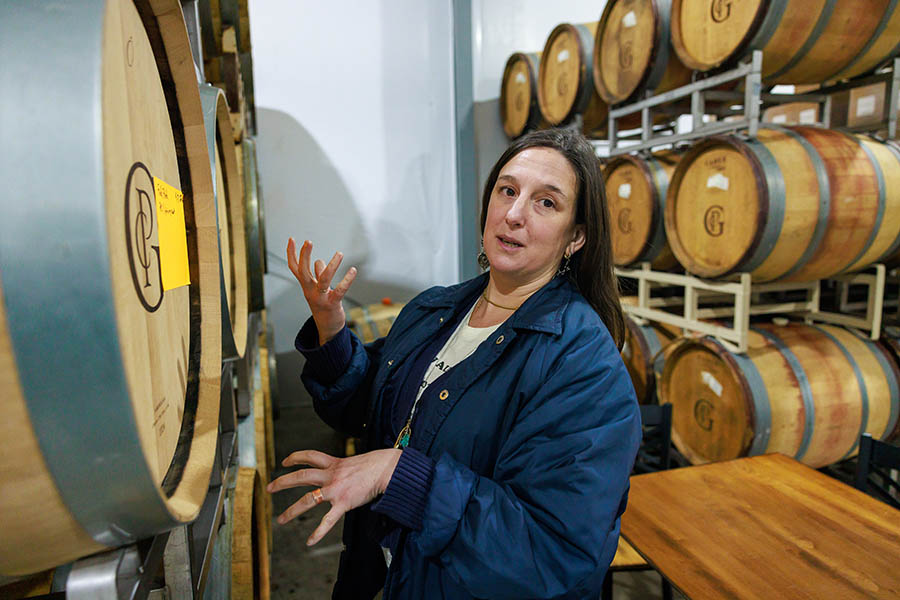
Another option is to distill spoiled wine into liquor. Brandy, in fact, is typically made by distilling wine. A friend’s attempt to turn smoked wine into brandy had turned Anderson’s stomach with one taste; it seemed to amplify the smoke rather than obscure it, he says. But Anderson eventually let distiller Lynsee Sardell give it a go. Sardell, who is based in Forest Grove, has a decidedly hands-on, “analog” approach to running a still — no timers or electronic equipment.
When Sardell returned with a brandy a week later, Anderson was floored. It was clean, buttery, richly textured — far from the overly sweet, butterscotchy concoctions often sold in the U.S.
Anderson was now sold on brandy, but he knew producing thousands of gallons of the stuff would create another overstock problem. Sardell had another idea.
As she explains, all whiskey needs two things: something sweet, often corn, that can be distilled; and something to make it taste good, typically rye or barley.
Starting in 2021, Patricia Green Cellars began purchasing heritage strains of barley and rye from small farms in Oregon to be malted and distilled. The individual grain distillates were combined with small amounts of the smoked brandy to create a hybrid “grain and grape” whiskey.

“I told Jim, we can make something that’s really delicious and easy to drink,” Sardell says. “And I gave him every reason to say no to me. I told him, ‘OK, this is the coolest route, but it’s also the most difficult route.’ And he was like, ‘Yep, let’s do it.’”
In 2022 the Patricia Green team purchased a distillery in Forest Grove to be operated by Sardell. Today Patricia Green ages spirits in repurposed French oak wine barrels. Current production is around 300 cases with a capacity of around 1,000 (compared to 15,000 to 20,000 cases of wine produced annually by the winery).
Fortified Wine
The smoke problem isn’t new to the wine industry, and Patricia Green Cellars is far from the only Oregon winery hit hard by 2020 fires. Oregon’s more than 1,100 wineries and vineyards, scattered across a large and complex viticultural geography, each have a different experience every wildfire season.
But because the smoke problem is so far-reaching, there’s ample energy in the industry to prepare for and remediate smoke damage, according to a spokesperson for the Oregon Wine Board. Researchers at a number of West Coast institutions are committed to helping the industry face smoke events. Washington State University researchers implemented a system of smoke detectors in Yakima Valley wine country. And with partial funding from the USDA, Oregon State University is engaged in a number of smoke-related projects in the areas of viticulture, food science and wine chemistry.
For one, OSU researchers are working on a spray-on coating to mitigate smoke-
volatile phenols. Viticulturist Alec Levin and his team analyze samples at OSU’s Smoke, Wine and Grapes Analytical Chemistry Lab in Corvallis, which provides chemical analysis for wine growers around the state.
As a result of 2020, many wineries now keep smoke contracts with their fruit producers. They’ve also altered their library practices. Maintaining a stocked cellar, or wine library, is common in commercial winemaking as a form of insurance for unforeseen events. Since 2020, many Oregon wineries have elected to sell from the libraries due to a shortage of current-
vintage wines. Others have begun selling from 2021 and 2022 earlier than planned. Wineries in this camp, including Patricia Green, now operate on the edge with diminished reserves to draw from in the event of another 2020.
Though the winds of 2020 were historic, attorney Dustin Dow says the 2020 fire season was no accident of nature. To date, Portland-based power company PacifiCorp has settled more than 1,500 claims relating to the 2020 wildfires for more than $1 billion. Patricia Green Cellars is among the 34 plaintiffs in the so-called Sokol Blosser lawsuit — named for the Dayton winery serving as lead plaintiff. With a court date set for November, the lawsuit is the first of five pending mass tort cases brought by Dow’s Ohio firm, BakerHostetler, scheduled to go to trial.
PacifiCorp is accused of leaving power lines energized ahead of the Labor Day wind event despite strong warnings from public officials and even the company’s own forecasters.
“This wasn’t just failing to de-energize the power lines,” Dow says. “It was failing to de-energize power lines after being warned by the state fire chief that if they left their lines energized, it was going to start fires. And that’s exactly what happened.”
A spokesman for PacifiCorp said the company has a “robust” wildfire mitigation plan approved by the Oregon Public Utility Commission. “PacifiCorp has added in-house meteorologists, installed hundreds of weather stations that monitor fire conditions in real time, and continues to improve its ability to provide safe, reliable power to Oregon customers,” writes PacifiCorp spokesman Simon Gutierrez. (Editor’s note: Since the print edition of this story ran, the Oregon Department of Forestry has released a study saying the 2020 Santiam Creek fire was caused by embers floating up from a nearby fire, not from energized power lines.)
Guiding Spirits
On a brisk afternoon in early January, Jim Anderson read news updates as he prepared research forms to send to his lawyer in his ongoing case with PacifiCorp. As if poring over financials from the past four years wasn’t enough to put him in a bad mood, catastrophic wildfires were ravaging Los Angeles.
It seems to Anderson that with each fire season since 2020, his winery has barely escaped disaster. But he knows luck eventually runs out. A fire could burn in Canada and all it would take to shut him down is a shift in the wind.
“If another 2020 comes along, we’d be out of business,” Anderson says. “The whiskey thing is great, but we couldn’t survive on it. I mean, we lost maybe 90% in 2020, and we’re still recovering financially from it. So I’m extremely nervous.”
Diversifying beyond wine has been a learning experience for both Sardell and the team at Patricia Green Cellars. Despite initial losses, they’ve succeeded in making unique whiskey, including rye and barley varieties, and often hear favorable reviews from customers. To say a product is Oregon-made isn’t unique, but few whiskeys can claim to be made here entirely — using only Oregon-grown ingredients and local labor. A dirty secret in the industry is how many Oregon distilleries simply bottle and repackage whiskey made elsewhere, Sardell says.
These efforts to stay afloat since 2020 are in keeping with the real-life Patricia Green’s approach to winemaking. The winery’s namesake died in 2017 at 62 of an apparent stroke at her cabin near Roseburg. Patty Green was one of the state’s first female winery owners, and those who remember her say she was always willing to try new things. They think the distillery project would have been right up her alley.
Jim and Patty met in the early 1990s when both worked at Torii Mor Winery in Dundee. In 2000 they decided to go into business together, opening their own winery on 52 acres in the Ribbon Ridge region. When it came time to give the place a name, they decided they wanted a simple name with a simple story behind it.
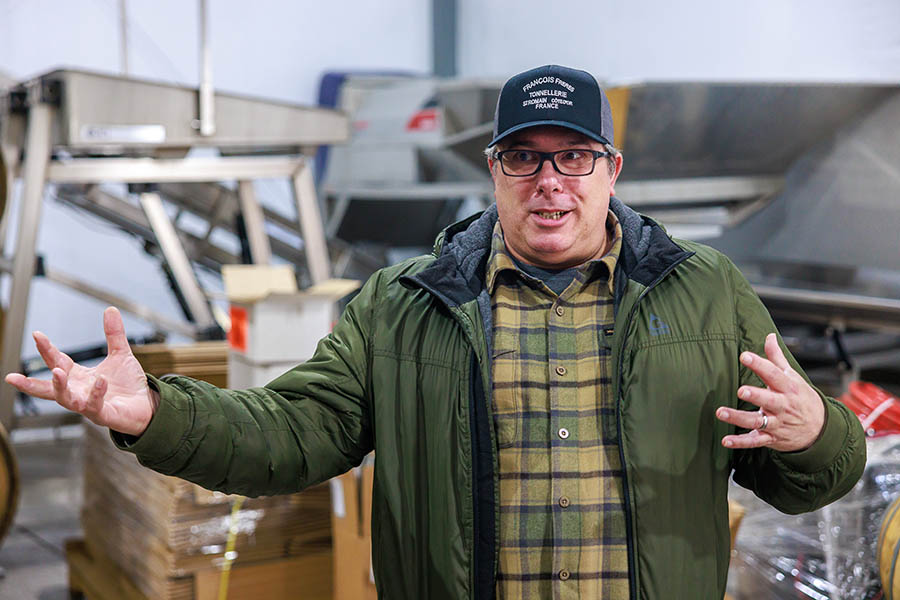
“It came down to the wire,” recalls longtime Patricia Green winemaker Matt Russell, repeating that simple story. “They sat around the table and Jim was like, ‘Look, you’re the only marketable person here.’”
Anderson sees Green’s legacy alive in the person of Lynsee Sardell, one of the few women to crack into the region’s distilling boys’ club. Anderson says Green was at least his equal in winemaking, though unwitting guests would often ask her if they could speak with the owner or the manager.
Committed to sustainability and imbued with a DIY sensibility, Green also never threw anything away. She kept pieces of old equipment in bags she’d store all around the property. After she died, those bags remained.
One day years later, at a critical stage of wine production, power at the winery went out suddenly. Panic started to set in until Russell had a thought. He looked up and down the property until he found it: a plastic bag containing old fuses, labeled in Green’s distinctive handwriting.
“She saved our butts that day,” Russell says. “It’s cool she still helps us out.”
Click here to subscribe to Oregon Business.