


How evolutions in charter aviation bring environmental and economic opportunity
Since the dawn of aviation, efficiency has powered progress—unlocking longer ranges, accessible pricing and lower fuel usage—shaping an increasingly more climate-conscious industry. This natural evolution has helped transform charter air travel into a practical choice and expanded its role within the nation’s transportation ecosystem.
Western Aircraft, a Boise-based airline and leader in aviation services, embraced light, point-to-point travel early on, appreciating its impacts on carbon, comfort and convenience.
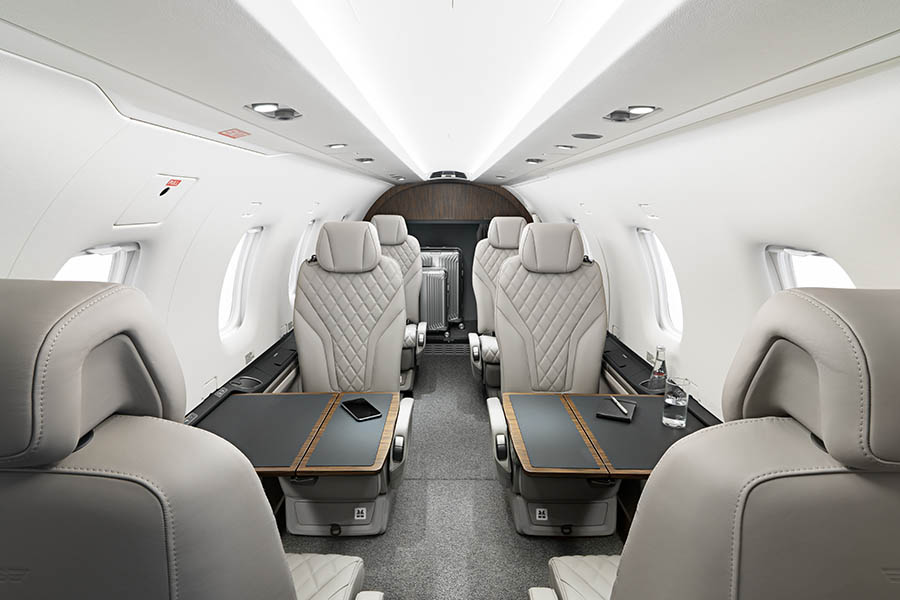
“Charter aviation has evolved. Every stakeholder — air traffic controller, operator, flight planner — is working toward optimizing routes, altitudes and schedules,” explains Josh Weinshank, Director of Operations, Western Aircraft. “There’s a natural migration toward being as fuel-efficient as possible, and that brings both financial and environmental impacts.”
Ironic, perhaps, that a sector often associated with excess, lives and dies by its level of efficiency. Wastefulness undermines competitiveness, accessibility and sustainability, something the public values increasingly more.
The right tool for the job: light, precise air travel
“More and more, people are seeking efficient forms of travel,” Weinshank continues. “It’s about choosing the right tool for the mission. And a lot of the time, it just so happens that our PC-12s are exactly the right tool, so clients will take that over the jet.”
Western Aircraft owes its success in precision travel partly to putting its eggs in the right basket, in this case, the right aircraft: the Pilatus PC-12, a single-engine turboprop aircraft that has managed to stay light while maximizing cabin space and comfort. By 2010, Western Aircraft had become the world’s largest PC-12 dealer.
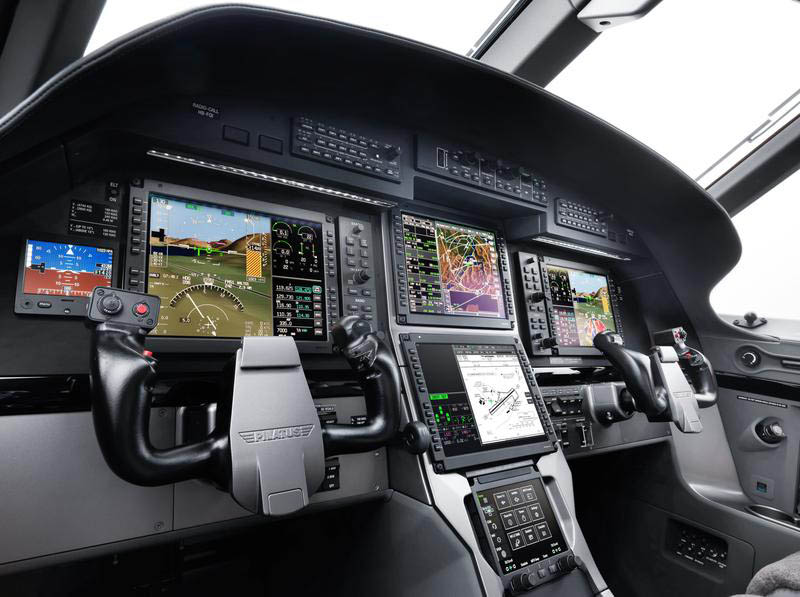
“It’s a very sought-after airplane with legions of fans worldwide and a sales backlog,” Weinshank says. “We started our charter operation with it. It was a beautiful airplane then, and it just gets better and better.”
Powered by the PT6 Pratt & Whitney engine — an industry stalwart with over a billion flight hours logged — the PC-12 combines reliability, comfort (think roomy and quiet) and fuel economy. It emits 40 percent less carbon than a leading light jet, due to features such as a first-of-its-kind digital autothrottle and aerodynamic wingtip devices. Decisions around exterior paint and interior fabric have led to a decrease in harmful chemicals and material waste.
Cutting wasted time: from empty legs to nights on the road
Still, aircraft selection is just one part of the efficiency story. The greater opportunity lies in what charter aviation can eliminate: indirect routes, missed connections, overnight stays and time lost in transit.
For businesspeople, point-to-point travel brings increased productivity and fewer nights in a hotel. For private travelers, it could mean making it home for a once-in-a-lifetime event or simply in time to tuck the kids into bed.
“A common misperception is that it’s always high-net-worth individuals flying with us,” Weinshank notes. “And that’s actually not true. People travel with us for any number of reasons — especially when time is critical.”
Western Aircraft actively markets and fills empty legs both through its own platform and that of third parties. For travelers open to it, it facilitates flight sharing, making flying more accessible and sustainable at the same time.
The point-to-point model: bridging infrastructure gaps
Charter air travel brings an alternative to centralized hub-and-spoke flight maps, diversifying available options. This approach is especially impactful in the US, where flight routes concentrate around high-traffic urban hubs, leaving large swathes of the country underserved.
Following the pandemic, many Americans relocated away from major metro areas as remote work and satellite offices took hold — making flights from smaller airports hugely relevant.
“I would like to see charter leveraged more for really efficient point-to-point use cases,” Weinshank shares. “Currently, if someone wants to fly from Boise to Reno they have to connect through Portland or Seattle or Salt Lake City, for example, consuming valuable time.”
Agile charter aviation services could address gaps within the nation’s travel and logistics operations without demanding large infrastructure investments.
“There are opportunities everywhere. Because of the sheer size of the US, we probably rely on air travel more so than European countries, who have high-speed rail as a realistic alternative,” Weinshank adds.
“It’s about finding solutions for unmet transportation needs, and these solutions will have trickle-down effects on regional innovation, development and prosperity. We as a team are excited by the potential here.”
Expanding economic opportunity: Full-service aviation & logistics partnerships
Today, Western Aircraft holds a long list of titles: charter airline, new and preowned aircraft dealership, fixed-base operator, authorized service center, certified aircraft repair station and worldwide parts distributor — with a team of 350 specialists in maintenance, avionics, interiors and more.
“Our strength is in the verticals and in program management,” Weinshank notes. “We just have so much experience with this. It’s really our niche.”
Although Western Aircraft values its reputation as a leading charter airline, the organization has also established itself as a full-service aviation partner for innovative logistics programs.
Nowhere is this more evident than in the evolution of its Lanai Air partnership.
The Hawaii-based initiative sees Western Aircraft operating under the trade name Lanai Air and working in close partnership with the island’s major business operator to serve tourists and residents.
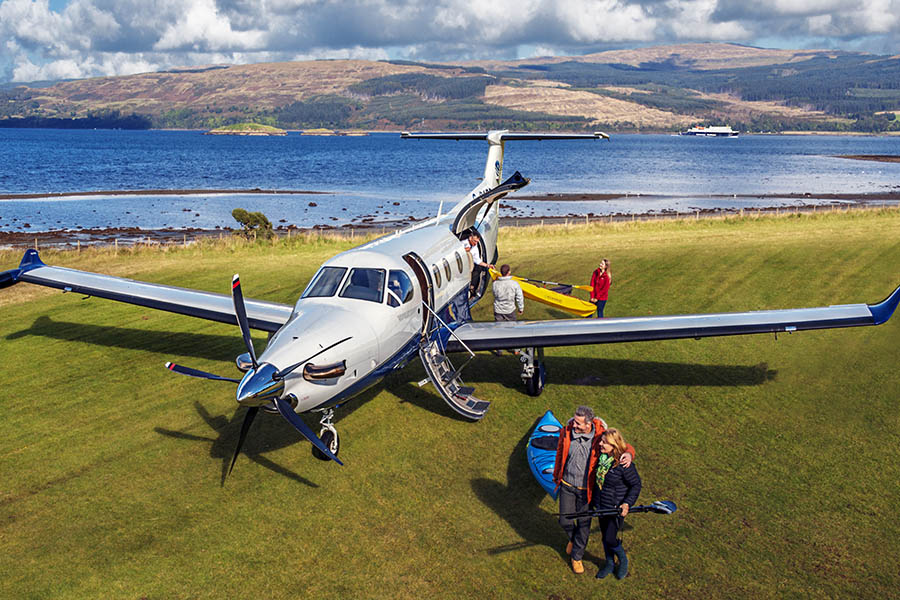
What began as an agreement to operate flights for Four Seasons guests traveling between Oahu and Lanai, matured into a multi-faceted program—charter, commuter, cargo—that supports the island community and economy.
Western Aircraft now plays a critical role in Lanai’s transportation ecosystem: It provides residents with reliable access to Oahu for essential services, including medical appointments, and manages all import-export flights.
Behind the scenes, Western Aircraft handles scheduling, public ticketing, fleet maintenance and contingency planning—crucial when dealing with unpredictable weather. On average, Lanai Air operates over 1,000 flights per month within the State of Hawaii.
“This has grown into a really targeted, smart, well-oiled program,” Weinshank says. “It’s been incredibly rewarding to see our decades of experience and wide-ranging expertise come together to serve this project.”
Connecting more places, more responsibly
Western Aircraft plans to pursue further partnerships, helping develop solutions and strategies tailored to specific goals across diverse regions.
“We’re easy to work with and easy to partner with, because we fundamentally espouse transparency,” Weinshank reflects. “We almost have an old-school way of doing business. What you see is what you get. There are no surprises or weird hidden costs. And that’s worked well for many years.”
With a firm belief in the importance of charter air travel, Western Aircraft is focused on leading the way in personalized service, planet-conscious efficiency and pioneering logistics solutions.
“We’re not just delivering a seamless, high-quality flight experience,” Weinshank concludes. “We’re helping shape a smarter, connected, responsible future for air travel — one that includes more people, more places and, ultimately, leads to more opportunity.”