
Executive action could open 50% of forest service lands to timber harvest.
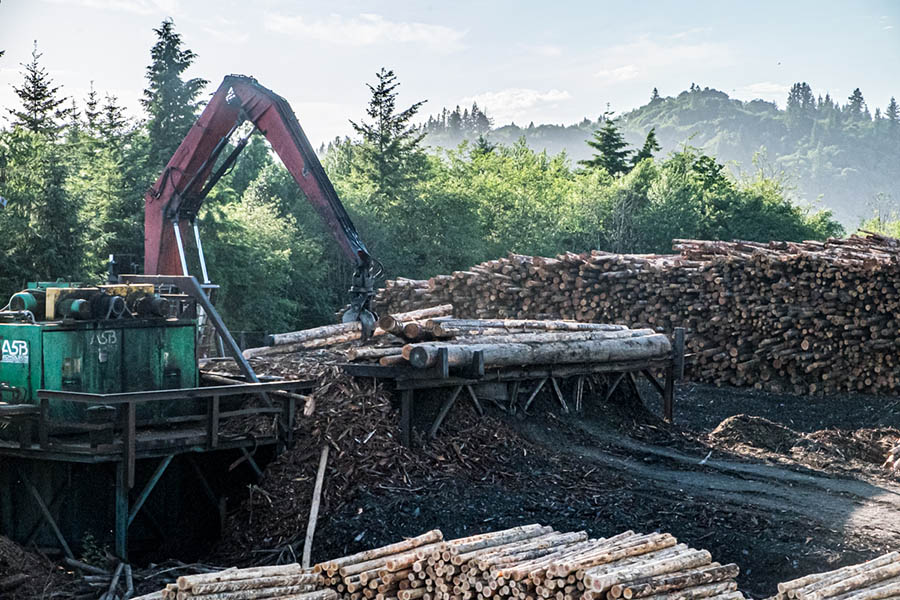
President Donald Trump’s administration issued an emergency directive this month that opens more than half of U.S. national forests to logging projects.
An emergency designation of 176,000 square miles of U.S. Forest Service land effectively rolls back environmental protections and accelerates the timber permitting process for logging projects. Last month, the president signed an executive order intended to increase timber production on public lands.
The lands identified in the president’s April 3 designation order are located primarily in Western states and have a combined size greater than California. Forest land in the Great Lakes region as well as the South and New England are also affected.
In Washington, parts of the Mount Baker-Snoqualmie, Gifford Pinchot, Okanogan-Wenatchee, Colville and Umatilla national forests are targeted for increased logging, the Seattle Times reports.
The Trump administration cited wildfire danger as the reason for the emergency, though the USDA directive doesn’t mention climate change. The world’s temperature has increased steadily since the 1980s with human activity the leading driver, according to the National Oceanic and Atmospheric Administration.
Former President Joe Biden also sought to increase logging on public lands to mitigate wildfire danger though Forest Service timber sales declined during his time in office, the Associated Press reports.
The Forest Service manages 144 million acres of forest land in 43 states. Approximately 43 million acres are deemed suitable for timber production, according to an April 3 memo by USDA Secretary Brooke Rollins.
A USDA report from 2023 identifies 66 million acres of forest service lands with fire risk of high or very high. In the memo, Rollins writes that the country’s national forests face a crisis due to uncharacteristically severe wildfires, invasive species, outbreaks of disease and insects and other stressors.
The memo, which calls on USDA staff to streamline environmental review of logging projects, doesn’t mention climate change.
“These threats — combined with overgrown forests, a growing number of homes in the wildland-urban interface, and more than a century of rigorous fire suppression — have all contributed to what is now a full-blown wildfire and forest health crisis,” Rollins writes. “We can do more to contribute to American prosperity and protect our national and economic security.”
The Forest Service has sold about 3 billion board feet of timber annually for the past decade. Timber sales peaked several decades ago at about 12 billion board feet amid widespread clearcutting of forests. Volumes dropped sharply in the 1990s as environmental protections were tightened and more areas were put off limits to logging. Most timber is harvested from private lands.
Timber sales are commonly opposed by environmental, tribal and other organizations, which can delay proposals for years. This month’s secretarial order exempts the outlined forests from the objection process and narrows the number of alternatives federal officials can consider when weighing logging projects.
Environmental groups responded to the directive with fears it will erode endangered species protections. Rejected the president’s contention his actions were driven by a concern for wildfire protection and claim his policies are ineffective at reducing wildfire risk.
Steve Pedery, conservation director for Oregon Wild, said in a statement some of the lands targeted for harvest include lands off-limits to logging and rainforests that aren’t threatened by wildfire.
“The memo isn’t about protecting forests,” Pedery writes. “It is about logging and looting 60% of America’s national forest lands … by declaring a fake emergency to justify weakening protections for our clean water, wildlife and wetlands. When the secretary of Agriculture says the primary goal is to ‘protect timber resources,’ it pulls the mask off this manufactured emergency.”
Following the president’s directive, the Portland-based timber industry group American Forest Resource Council filed a federal lawsuit seeking to eliminate critical habitat protections for the northern spotted owl. The suit claims the spotted owl’s greatest threat is incursion from another winged predator: the barred owl. The Division of Fish and Wildlife plans to implement a cull program on the barred owl, a plan opposed by animal welfare groups, according to The Seattle Times.
Anna Medema, an associate director with the Sierra Club, writes in a statement that billionaire Elon Musk’s “chaotic” efforts to reduce the federal budget have led the elimination of wildfire prevention staff and slashing of preparedness budgets. She called the president’s actions the most egregious example yet of favoring corporate profits over protecting public lands.
“What Donald Trump and his cabinet are actually interested in is using any power at their disposal to hand over control of the public lands and national forests that belong to all of us to billionaires and logging companies,” Medema writes. “The American people should not tolerate this sleight of hand from the people who have a duty to protect these landscapes for the next generation.”
Click here to subscribe to Oregon Business.