
As a proposed Live Nation venue clears final hurdles, Portland’s noteworthy music scene mourns and readies for a fight.
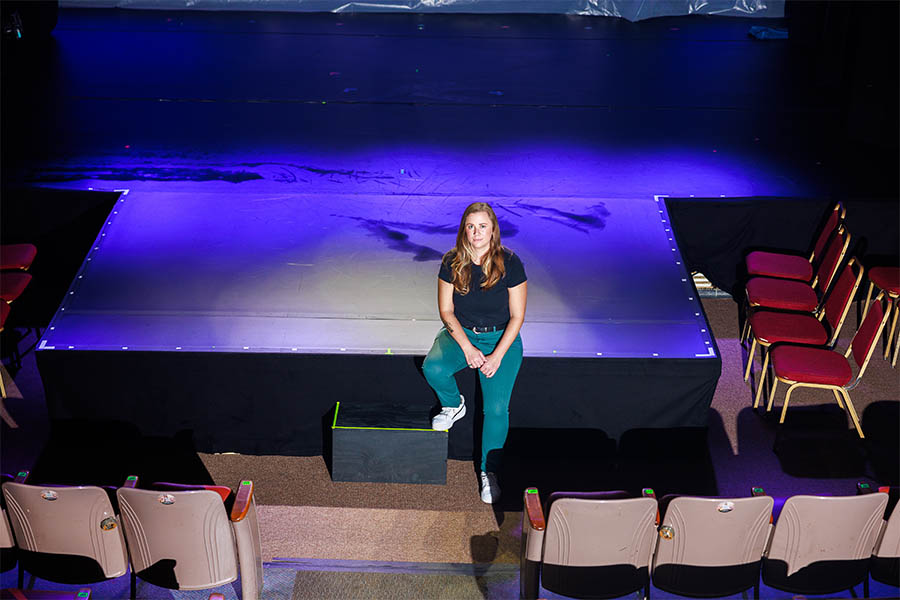
Like nearly all Portland musicians, “musician” isn’t Ronnie Carrier’s only job title. The indie-folk artist splits her time with live-music production, and since moving here 10 years ago, she’s worked nearly every role from runner to stage manager.
At the Alberta Abbey — a small, vibrant community arts center in Northeast Portland — she’s helped book nationally touring acts like North Mississippi Allstars, Pokey LaFarge and Nik West.
“The nice thing about music venues is they understand my schedule; everybody’s a musician,” she said on a recent tour of the Abbey.
With several world-class large music venues and dozens of small independent stages spread around the city, Carrier understands there’s a “missing middle” in the local music scene. For lack of venues in the 2,000- to 4,000-capacity range, major acts already skip Portland in favor of venues in Bend, Ridgefield and Seattle.
But local leaders have chosen to address this need in part by selling public land to developers partnered with Live Nation, a global entertainment company accused by the federal government of predatory and unfair business practices. It’s a “worst-case scenario” for Carrier, and she and many in the city’s storied music scene are girding for a lengthy battle with the behemoth.
“We know that we’re past the point of stopping them from coming,” she says. “They’re here, so we need to think about how we’re going to hold them accountable.”
A Venue by Any Other Name
Future Portlanders will likely know the project at Southeast Water Avenue near the Hawthorne Bridge by some other name. It could be the name of a wealthy donor or a corporate sponsor. The name could change over time, à la Providence Park (formerly Jeld-Wen Stadium, formerly PGE Park and several others). For now, the planned $47 million concert hall on the Central Eastside is known to many simply as “the Live Nation venue,” a name that seems to irk the development team of Beam Construction & Management and Colas Development Group, despite the lack of a preferable alternative.
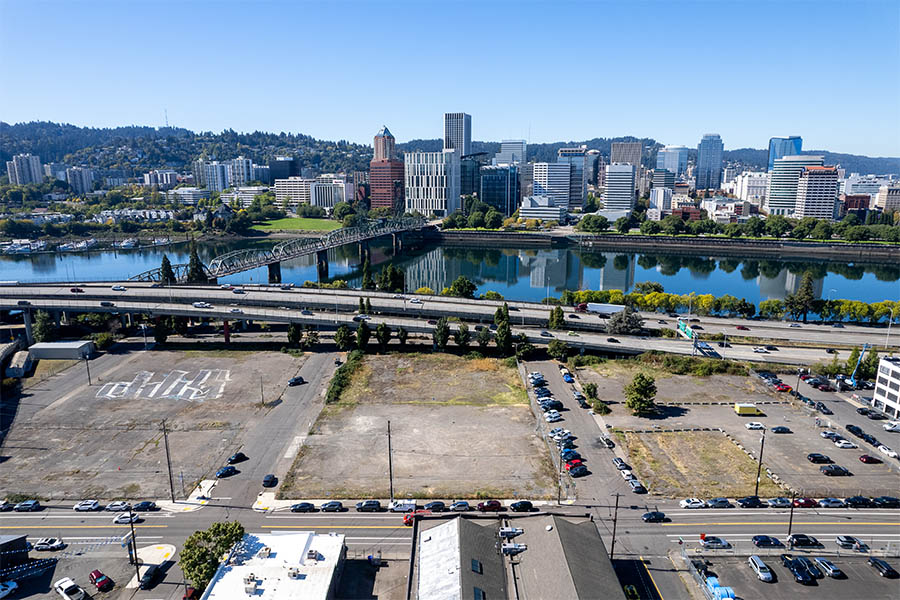
The venue’s proposed location, a .8-acre lot in the so-called Workshop Blocks, has been vacant and used for parking since 2017, when the Oregon Department of Transportation sold it to the city’s economic development agency, Prosper Portland. Beam originally conceived a project much broader in scope: a mixed-use development with a venue as well as coworking and light industrial space. But the pandemic caused demand for industrial office space to crater, and the developers sought new partners for the project.
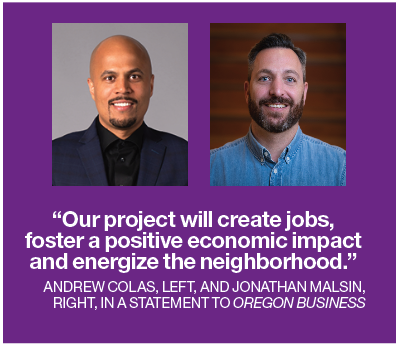
Project leaders, including Colas head Andrew Colas and Beam president Jonathan Malsin, prefer to focus on the future venue’s benefits, like large set-asides for women and minority contractors, hundreds of thousands of expected concertgoers and the millions they bring in multiplier-effect dollars.
“Our project will create jobs, foster a positive economic impact and energize the neighborhood,” the two wrote in a statement to Oregon Business. “We are grateful to all who voiced their support, as well as those who expressed concerns. We genuinely care about our city and will use this valuable feedback to build an exceptional community asset that brings Portlanders together.”
In a statement to Oregon Business, Mary Clare Bourjaily, Live Nation’s market president for Oregon, writes that the company is proud to bring economic development to Portland alongside partners Beam and Colas. “As members of Portland’s vibrant music ecosystem, we look forward to continuing to engage with the community to share more about how this project will benefit the local fans and artists,” she writes.
To be sure, Live Nation had been in Portland for years through its event promotion and artist representation services. But Live Nation also operates venues in every major market in the U.S.
Opponents say Live Nation squeezes out local competition when all three components of its business model work in concert. And as a massive corporation, it can undercut local prices and absorb losses until competition drops out. Other tactics include purchasing major venues and closing them down, buying buildings and leasing to independent venues at rates higher than valuation, and denying artists under their representation the opportunity to perform at independent venues.
This “playbook” is described in detail in an antitrust lawsuit against Live Nation/TicketMaster, filed in May by the federal government and cosigned by 40 state attorneys general, including Oregon’s Ellen Rosenblum The suit alleges Live Nation/TicketMaster maintains an unfair monopoly in live events and seeks to break up the company.
“I’m blown away that the legal departments of both Prosper Portland and the city went along with this nonsense,” says concert promoter David Leiken, a mainstay in live music in the Pacific Northwest for five decades. “What if the government breaks up Live Nation? Then who are we doing business with?”
Leiken recently provided written testimony in a federal lawsuit against Live Nation/Ticketmaster alleging the corporation maintains an unfair monopoly in live events. Forty state attorneys general have joined the suit in a show of bipartisan agreement.
In a time of intense polarization, Americans seem united in one position: Ticket fees suck. That’s why Leiken is frustrated people who hate 40% service fees often fail to spot the root cause when it’s right in front of them: Live Nation, which he refers to by the name of its merger partner, Ticketmaster.
“A lot of people can’t put two and two together. Everybody knows that something’s wrong when a show goes on sale and all of a sudden the price spikes to $3,500. People know something’s wrong but they don’t know why. And the justice department might finally be getting a clue.”
Live Nation’s supposed playbook has played out in the most prominent music scenes around the country: Nashville, D.C. and Austin.
Philip Graham’s Ear Trumpet Labs in inner Northeast Portland manufactures microphones that retail for around $600 to $700 and these handmade items are especially popular with acoustic artists. Graham hears from lots of musicians from around the country, especially from Nashville aka Music City USA, and they say the same things about Live Nation.
“I’m not joking when I say that in the last five to 10 years, there are probably half to a third as many independent venues nationwide. That’s how steep the decline has been,” he says.
Until a month ago, Portland was the last major city without a Live Nation venue.
Live to Regret
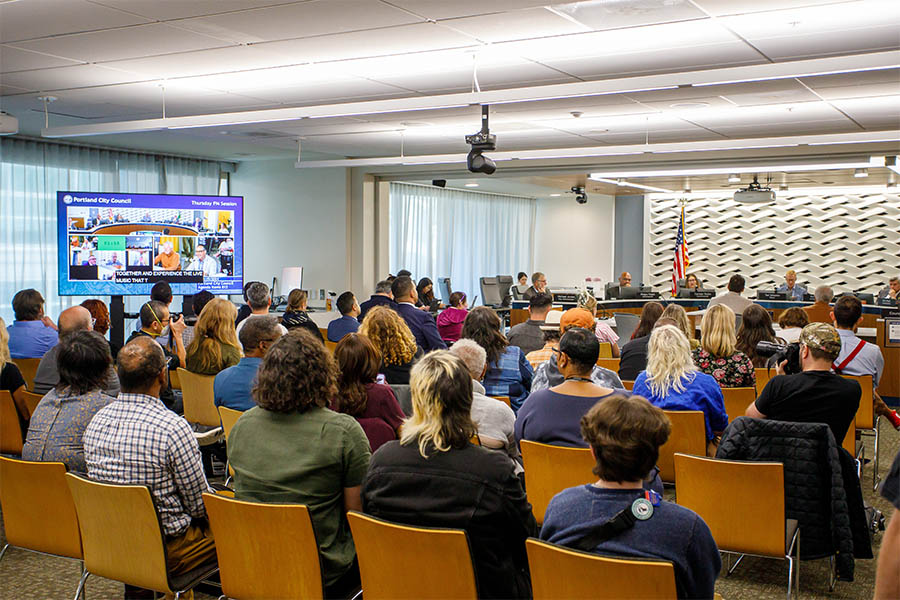
Over the last two years, public hearings were held and vocal opposition was heard at each. The matter came to a head in mid-September at two crucial public hearings. Prosper Portland first considered the sale of the land to Beam and Colas. The next day, the Portland City Council unanimously rejected a last-ditch land-use appeal by music industry-advocacy group MusicPortland.
Beam and Colas came to the Prosper Portland hearing with what they said were hard-won concessions from Live Nation. They include a promise not to require so-called proximity clauses — which prevent artists from performing at competing venues for a certain length of time before or after a scheduled performance — and a commitment to host community events. In the end, leaders in Portland were comfortable with concessions made by Live Nation despite reservations. When he voted in favor of the sale, Prosper Portland commissioner Marcelino Alvarez said his “inner 17-year-old self” was yelling at him.
That sentiment is reminiscent of Portland city commissioner Steve Novick, who has spoken about the regret he felt after allowing Uber to establish in Portland a decade ago when he oversaw the city’s transportation bureau. Now Novick is among the dozens running for a seat on the freshly reconfigured Portland City Council. Another is Jamie Dunphy, a former policy advisor to Nick Fish and a leader of MusicPortland, which organized opposition to the Beam/Colas/Live Nation proposal. A musician himself, Dunphy has made opposition to Live Nation central to his campaign, , occasionally striking a combative tone, as at a September campaign event where he said more than one person had suggested “firebombs” should the venue move ahead as planned. “I don’t encourage that, but we’re going to get together after [Sept.] 19th and see what our options are,” he said. (Dunphy later apologized for the remarks.)
MusicPortland has polled most council candidates about Live Nation and plans to issue endorsements based on the results.
More the Merrier
Live Nation had tried for years to get into Portland, at one point going several steps toward building a House of Blues in the Lloyd Center.
It wasn’t alone. The company’s top competitor, Anschutz Entertainment Group, or AEG, spent the better part of the last decade searching for a suitable site for a mid-size venue in Portland, and in July announced plans to build a 4,250-seat venue in the former Nordstrom building in the struggling Lloyd Center Mall.
MusicPortland members feel far less trepidation over the Monqui/AEG project. Though not ideal, AEG by and large allows venues to retain local ownership.
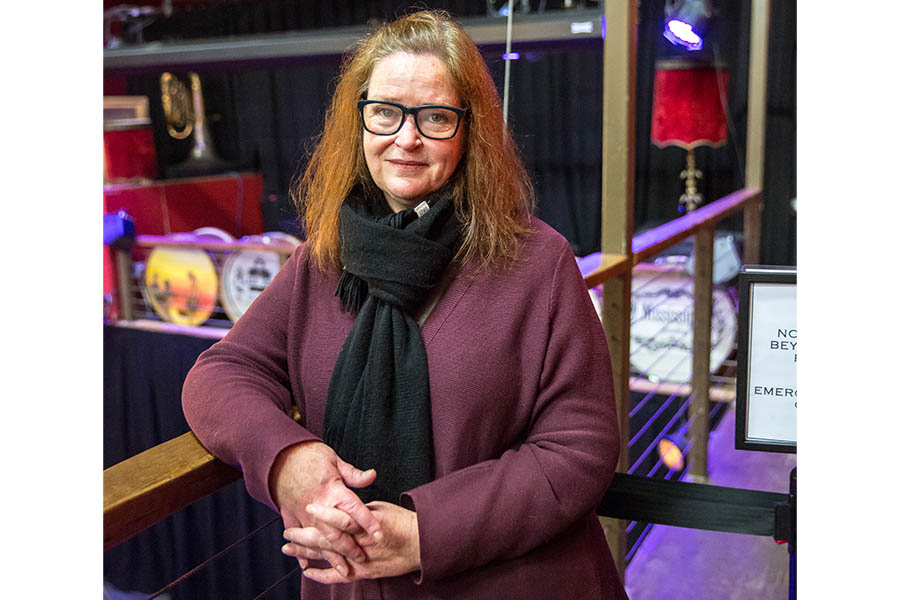
“It is a false equivalency to say the two corporate music enterprises are the same,” says Meara McLaughlin, executive director of MusicPortland.
At press time, the project was days away from an all-important stop before Portland’s Design Commission.
“We were ready for this kind of venue in Portland nine years ago,” says Monqui co-founder Mike Quinn. “We’re really ready for it now.”
Editor’s Note: The version of this story that ran in print erroneously stated that Live Nation had promised to require proximity clauses, when in fact they promised not to require them. Oregon Business regrets the error.
Click here to subscribe to Oregon Business.