

The project will cost at least $34 million and double the 25-year-old city-owned cultural site’s footprint in Old Town.
Joining the modern and the classical is be a major component of a newly unveiled expansion project of the Lan Su Chinese Garden, now celebrating its 25th anniversary in Old Town. Backers are eyeing a $34 million price tag supported by a public-private partnership.
“One thing we’re thinking about for this expansion is that it’s sort of completing the original vision of Lan Su — the yin to the yang,” says Elizabeth Nye, the garden’s executive director.
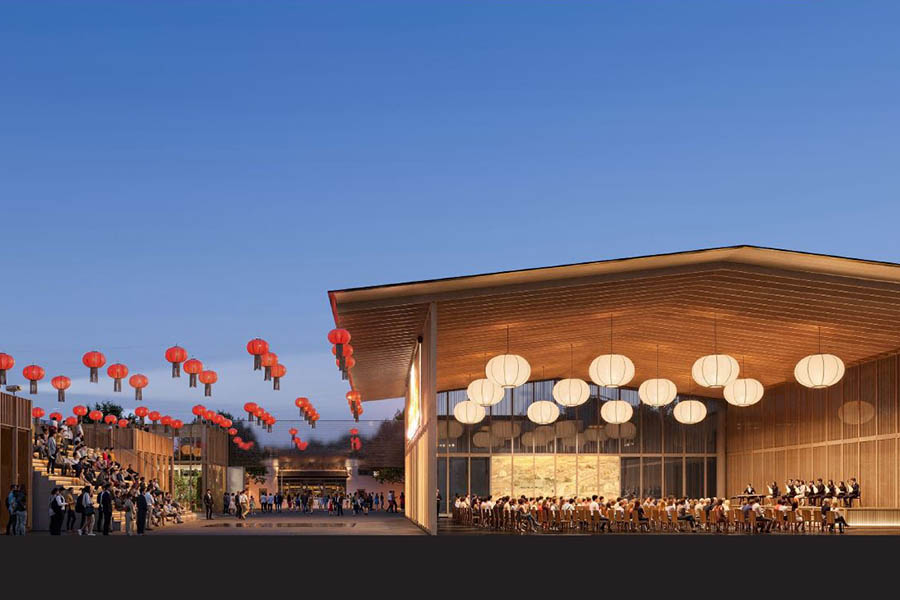
The expansion, which will double the garden’s footprint, will have modern appointments — like climate-controlled work spaces — not featured in the existing garden. Designers at ZGF Architects hope the project will counterbalance the existing, walled garden through a more open, “external” feel.
Lan Su is a walled Ming Dynasty-style classical Chinese garden that occupies one city block. The garden is owned by the city of Portland as part of its Parks & Recreation portfolio. A nonprofit organization manages the garden, its $3 million budget and approximately 38 employees.
Gardens of this nature were common at the homes of Suzhou government officials, known as scholars, throughout the Ming Dynasty, 1368-1644. Portland’s version was built with support from the Suzhou Foreign Affairs Department and the administration of former mayor Vera Katz. Teams of Chinese artisans and craft workers lived in Portland for nine months throughout the initial project. The garden’s natural elements, including 500 tons of stone and taihu rock, were shipped from Suzhou. Today the garden is home to more than 500 species of plant, 90% of which are native to China.

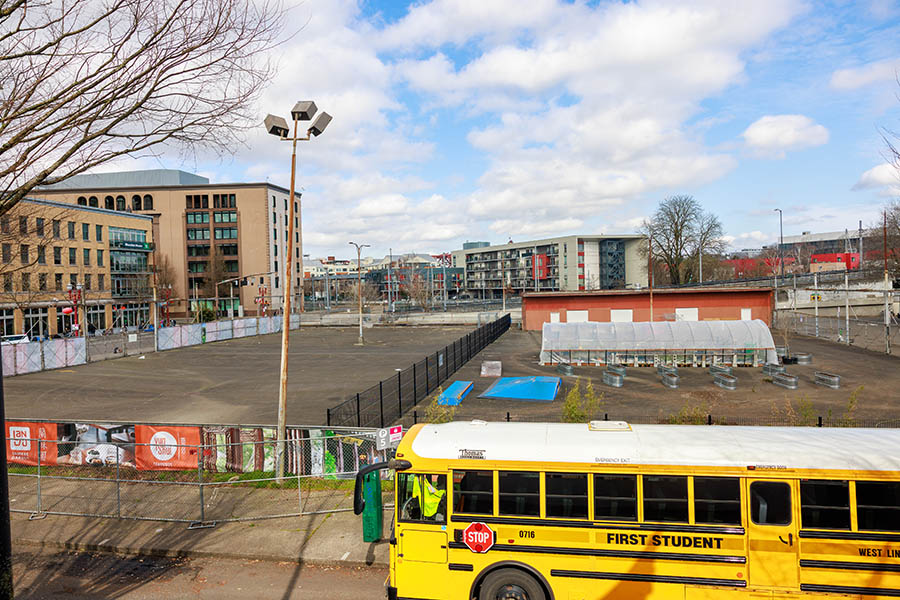
The expansion project will involve so-called Block 24, located across NW Flanders Street from the garden to the north. Now largely vacant and surrounded by chain-link fencing, expansion plans call for a banquet space, a permanent greenhouse to grow Chinese medicinal and botanical plants, cafe and a performance hall that opens onto a plaza.
The two blocks are separated by Flanders. Designers sought to provide continuity between the two areas. The garden is now working with city officials for the right to occasionally close Flanders Street for special events.
The new space will allow the garden to expand its collection of penjing (a Chinese precursor to the Japanese bonsai) There will be climate-controlled space for educational workshops and 6,000-square feet of on-site office space for the garden staff. Currently, the organization rents office space two blocks away; employees can occasionally be seen pushing wheelbarrows of supplies from one site to the other.
It’s one example of how the garden has clearly outgrown the original designs.
“We’ve certainly been able to make it work over the past 25 years,” Nye says. “But it’s not ideal.”
The current layout features limited accommodations for the many student groups that visit the garden. During the recent Lunar New Year celebration, one class of second graders ate lunch seated on the ground near the entrance in 30-degree weather, Nye says.
The garden sees around 100,000 annual visitors and serves as a “cultural anchor” in Old Town and is working to revitalize the area. Nye and others have sought a formal designation as a cultural district.
Old Town is small geographically but nonetheless has been home to populations of numerous ethnic communities: Chinese Americans, Japanese Americans, Roma, Greek, Jewish and African Americans. which also features the Japanese American Museum of Oregon, the Oregon Jewish Museum and Center for Holocaust Education, and the Portland Chinatown Museum. It also serves as a connection to China, Nye says.
The U.S. has more than 600 Japanese gardens but only a handful of the Chinese variety, according to Nye. As such, many Lan Su guests arrive expecting something like a Japanese or a botanical garden.
According to Nye, a Chinese garden is characterized by five elements: water, rock, plants, architecture and poetry. Poetry can found throughout Portland’s Chinese garden. One popular form involves couplets consisting of lines that can be read on their own as well as together. The garden’s name is a nod to this tradition. The “Lan” comes from the second syllable of “Portland,” and the “Su” is from sister city, Suzhou. And combined, the two form an expression that means “garden of awakening orchids” in Mandarin.
Click here to subscribe to Oregon Business.