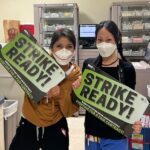

The strike, which involves 5,000 providers against 8 Providence facilities, may be the first time doctors have struck in Oregon history.
Thousands of Providence healthcare professionals around the state are preparing to strike, and for the first time in recent history, physicians are among their ranks.
In late December, nearly 5,000 Providence health care professionals represented by the Oregon Nurses Association voted to approve a strike at all eight Providence hospitals to begin Jan. 10. The called strike came after several weeks of unsuccessful contract negotiations. The union claims the health care system fails to follow state staffing guidelines and doesn’t offer competitive wages and benefits. On Dec. 30, ONA gave the required 10-day notice to strike.
The open-ended strike would be the largest of health care workers in Oregon history and could have vast impacts in one of the state’s largest health networks.
In 2023, Providence physicians took the rare step to unionize, joining the Pacific Northwest Hospital Medicine Association, a hospitalist union represented by AFT Health Care and staffed by ONA. The physicians who agreed to strike include 70 hospitalists at St. Vincent as well as obstetrician-gynecologists at Providence’s six Portland-area women’s clinics. These doctors say they’ve been asked to care for more patients than is safe, among other concerns.
Oregon Public Broadcasting reported Thursday the health system is preparing to weather the nurses strike but wants to return to the bargaining table with the physicians.
A Providence spokesperson told Oregon Business it is currently developing a strike plan to continue care at St. Vincent and its women’s clinics and has called for a federal mediator to resume negotiations with physicians.
“A simple thank you is not enough to recognize the caregivers who will be stepping up to care for our patients during this time,” reads a statement by Providence Oregon CEO Jennifer Burrows.
Preparing to recruit and orient temporary workers is the “key reason” Providence bargaining teams have lately avoided negotiations with union leaders, according to Providence spokesman Gary Walker.
“It’s clear from the written material distributed by union leaders that going on strike has been their No. 1 priority for months,” reads a statement from Providence. “It’s also clear over the course of more than a year that having an eight-hospital strike by nurses, physicians and other providers has been (ONA’s) ultimate goal. We call on those representing physician/provider groups to focus on mediation and put aside their planning for a walkout.
“As has been noted previously, there is no equivalent temporary replacement work force for physicians.”
Dr. Jennifer Lincoln, a Providence obstetrics hospitalist and union leader, spoke with Oregon Business Jan. 3 to discuss the latest in the labor dispute. Since our conversation, providers have moved forward with the strike, with 5,000 providers walking out the morning of Jan. 10.
This interview has been edited for length and clarity.
Oregon Business: What is the latest? I saw it reported that Providence wants to head back to the bargaining table with the physicians, if not the nurses.
Dr. Jennifer Lincoln: We’ve issued our 10-day strike notice with plans for all of us — up to 5,000 caregivers across eight different hospitals and 11 bargaining units — to strike at 6 a.m. on Jan. 10.
The most up-to-date part of the story is that at 5 p.m. (Jan. 2), Providence released a press release to OPB, who wrote an article saying Providence now wants to bargain with the physicians only. They say they’re not struggling to replace the nurses but are not able to replace the hospitalist providers and doctors. So now they want to invite us back to the bargaining table. But they didn’t communicate this directly with our union. And they failed to communicate that we never left the bargaining table. On Dec. 23 and Dec. 27, they received proposals from both the Providence Women’s Clinic and the hospitalists union. So they have them and we are waiting for their responses.
We haven’t left the table. We know that they likely did this … to split off the doctors from the nurses. And we stand in solidarity together.

OB: Have you found people listen a little more intently when it’s doctors making these claims rather than the nurses, who’ve been saying these things for a while now?
JL: Yeah, I think that’s the sad state of affairs. As physicians, we have the unique role of being somewhat harder to replace in terms of finding people to cross the picket line. But also, this is unprecedented, and by using our position of power, we can not just help ourselves by getting safer staffing levels and doing better by our patients, but we can also uplift our nurses. We know as doctors, without our nurses, we can’t do anything.
I can say as a physician who worked during the last, limited nursing strike, it was not easy. And it was not the same. So I know we need to support each other.
Yes, I do think that, sadly, Providence is listening now because of us being there. And we will not take advantage of that and leave our nurses behind. We will stand in solidarity with them.
OB: Can you talk about how a hospital might respond to a physician strike and whether services will be reduced. I know about strike nurses. Are there strike doctors?
JL: Providence can and has solicited other local physicians to cross the line and take over our positions. They’ve also reached out to locums, or temporary doctors. These are people who might travel in from who knows where, like the nurses who travel in and get these strike contracts. And the amount of money they have to pay them is astronomically high. I saw one posting for a night internal medicine hospital shift that was 70% higher than what a regular Providence hospitalist would make. And that’s just the doctor’s salary and doesn’t include the extra fee they have to pay.
So Providence is going out of its way to spend more money on people who aren’t part of this community or to cross strike lines to care for patients rather than engaging with the people who are already here.
There’s not as much of a network for strike doctors as there is for strike nurses, which I think Providence is realizing. We have been very pleased to hear from local OB-GYNs who have said they refused to cross the line and work in our absence.
OB: But is there a chance that patients who need care, won’t receive it?
JL: What I can say is that if patients feel that they need care, they should go to the facility they feel can serve them best. I don’t know if I can say more than that. I do know that clinics have been putting out messaging because, of course, patients are calling.
I think that the most important message Providence can put out to show patients they’re listening to them. Patients are asking Providence to get back to the table. Because this strike can 100% be avoided, and trust me, we all want it to be avoided.
OB: Unionization has been increasing in the health care sector, notably since the COVID pandemic. Why do you think this is?
JL: As physicians who’ve lived through a pandemic, we were initially hailed as heroes and then put under a lot of criticism for misinformation. We also saw hospital systems really laud us when we were needed, but then in the aftermath, they felt the need to tighten their belts and they didn’t have the same resounding support. As an OB hospitalist, our salaries were cut 12% to 15% in one of the first quarters during COVID. Mind you, they got PPP loan money. And mind you, we never took a shift off.
… I think the reason you’re seeing more unionization is because they see us as just a number and corporate greed has gotten out of hand.
Editor’s Note: This story has been updated from an earlier version.
Click here to subscribe to Oregon Business.