

Brand Story – SeaPort Airlines gets daily Portland-to-Seattle commuters home in time for dinner.
Back in early July, Kent Craford was driving north out of Portland on I-5 when he caught a glimpse of something that, in a way, only reinforced the case for his latest business endeavor: a miles-long traffic jam.
Over in the southbound direction, crews had closed a lane — mid day — so they could trim the cottonwood trees that line the highway. The resultant backup snarled traffic into a near standstill that stretched for miles between Woodland and Kalama.
“I mean, it’s just ludicrous,” says Craford, CEO of SeaPort Airlines, a reborn commuter airline offering daily flights between Portland and Seattle. “Those poor people. Some of them were coming from Seattle to Portland for business or vice versa, and they just added an hour or two to their trip, totally unplanned and unpredictable.”
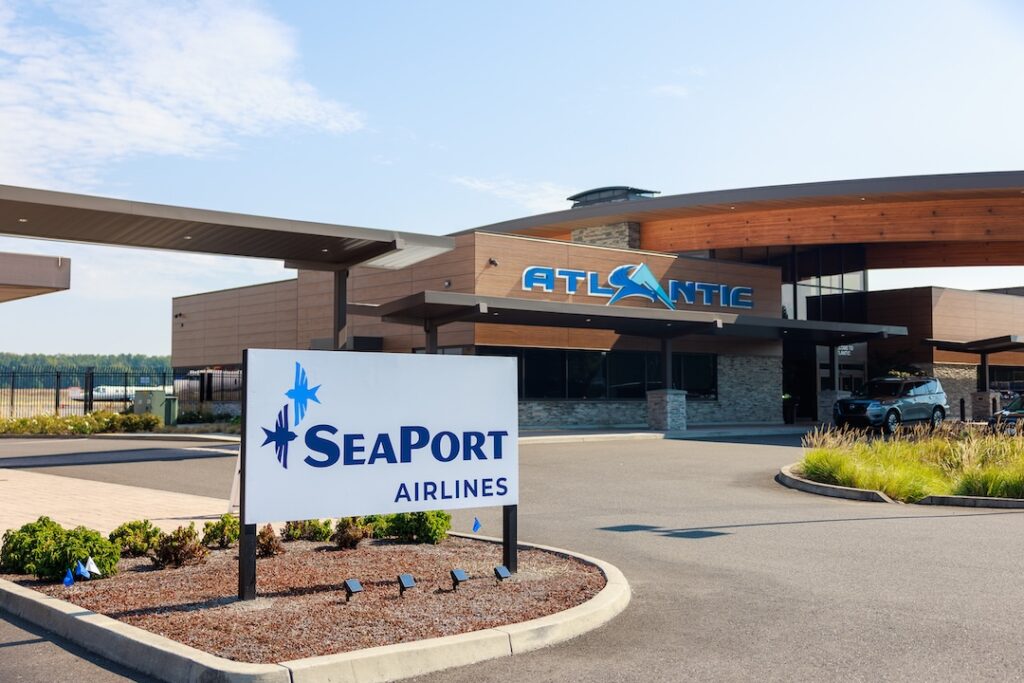
Fast-forward a week or two, and Craford was kicked back in one of the nine cush seats of a Pilatus PC-12 turboprop airplane, soaring past the snowy peaks of St. Helens, Adams and Rainier. The plane had taken off from the Atlantic Aviation terminal at Portland International Airport promptly at 9:26 a.m. It touched down not at the bustling Seattle-Tacoma International Airport, but at the library-quiet King County International Airport four miles south of downtown Seattle 41 minutes later.
Craford, a former lobbyist and political campaign director, took a meeting or two, extended an interview over lunch nearby, then hopped on a southbound PC-12 and was back on the ground in Portland by 3:30 p.m. — with plenty of time to make it home for dinner.
“These days, there’s no truly reliable option to get between Portland and Seattle. The train, I-5, SeaTac, all of it is highly unreliable,” Craford says. “We should be able to stand up a reliable, consistent, frequent and punctual transportation option between two major metropolitan areas. It is not a novel concept.”
In fact, SeaPort Airlines itself is not a novel concept. Craford and several business partners initially launched the airline in 2008, but he left the following year after the business took off in a direction he didn’t agree with. It later landed in bankruptcy in 2016, but Craford never lost sight of a future opportunity.
In 2011, he and some investors acquired a small commuter airline in Juneau called Alaska Seaplanes, which has grown into a fairly large regional service that, along with SeaPort and Island Air Express, boasts 300-plus employees and two dozen aircraft. He kept the focus on Alaska, all the while knowing that when the time was right, SeaPort would return.
That time came in May, when the airline, an entirely new, well-funded company, kicked off its daily commuter flights. It runs routes every 45 minutes during peak times, up to 24 flights per day. The cost per flight currently starts at $279.
In addition to the short flight time, SeaPort also positions itself as a speedier, more convenient option than anything else, including other airlines.
“I call it a conveyor belt in the sky,” Craford said. “It’s like boom! You’re here. It’s like a time machine.”

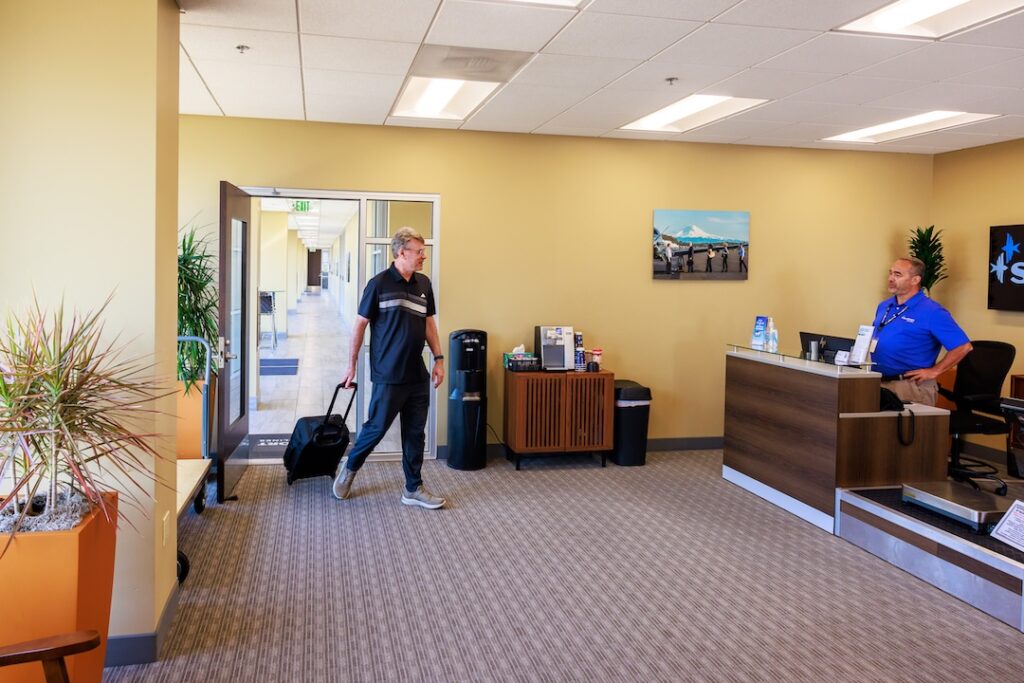
Passengers, who need only arrive 20 minutes before their flight, can park for free at the terminals in Portland and Seattle, which are mere steps from the runway and the awaiting aircraft. There are no Transportation Security Administration checks or security lines, and upon arrival, it’s easy to hail a rideshare to get to a final destination. SeaPort also keeps passengers out of the ever-more-crowded and always-under-construction terminals at PDX and SeaTac.
“All of this airport infrastructure in this day and age, it’s all focused on how to make your suffering more comfortable,” Craford says. “Let’s give you more lounges and more pretty stuff to look at while you’re waiting — and all the while, your most precious thing in life, your time, is just being burned away. And we’re here to say, no. Just leave all of that in the dust.”

About 17,000 people travel between Portland and Seattle every day, the vast majority up and down I-5. Craford says SeaPort hopes to capture just a small percentage of that traffic to really succeed. Some of that may come from adventurous folks who might not bat an eye at a quick day trip to Seattle or Portland, but the vast majority will be busy businesspeople who value their time. Even in the era of the perpetual Zoom call, Craford believes in the enduring power of in-person business meetings — and SeaPort’s ability to make those happen.
“There’s always some new technology that is saying, ‘There’s an easier way. There’s a shortcut so you don’t have to travel,’” he says. “It’s always a siren song. As soon as you start ignoring the importance of the person-to-person connection, you’re falling behind. Part of our business is predicated on the, I think, correct notion that those who are more successful and productive recognize the value of business travel and meeting in person. There’s just no doubt.”
For more information, visit FlySeaPortAir.com
Brand stories are paid content articles that allow Oregon Business advertisers to share news about their organizations and engage with readers on business and public policy issues. The stories are produced in house by the Oregon Business marketing department. For more information, contact Evan Morehouse at [email protected]