

Trump-era cuts promise to wreak havoc on the state’s food pantries and programs just when Oregonians need it most. Oregon food pantries are struggling to meet the demand — but they’re also undeterred.
This is the first story in a package of three articles about nonprofits, published in the Q4 issue of Oregon Business. Click here to read the introduction to the package.
Food-bank funding from the United States Department of Agriculture has always been a bit of a rollercoaster ride. Federal money ebbs and flows fairly reliably, depending on the policy vision of the person in office. For a while, that funding was definitely on the upswing.
“During the pandemic, money was practically falling out the sky,” recalls Nancy Mitchell, executive director of Food Share of Lincoln County.
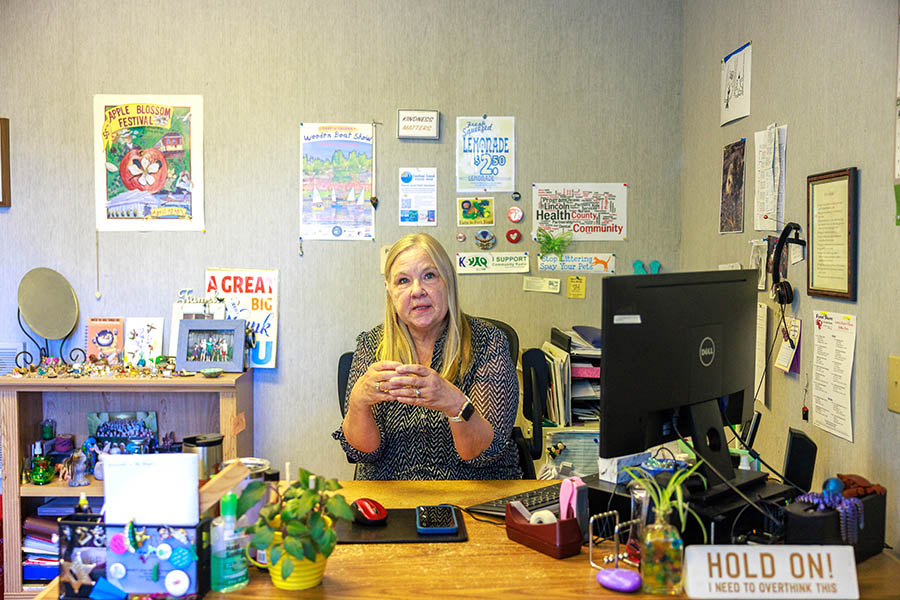
That pandemic-era bump of food and funds eventually leveled out or “returned to normal, whatever that is,” as Mitchell puts it. The need for patrons of Food Share of Lincoln County services, however, continued to rise. The coastal nonprofit — feeding communities in Newport, Lincoln City, Waldport and beyond — was not an outlier.
Food-assistance programs in every corner of the state started feeling the pinch. Elevated grocery prices, coupled with sky-high housing and health care costs, saw more hungry Oregonians seeking post-pandemic food relief. In fact, the U.S. Department of Agriculture’s annual household food-security report (released in September 2024) found that food insecurity in the state rose from 9.2% in 2018-2020 to 12% from 2021-2023. In 2024 it smashed yet another record: a whopping 2.5 million visits to food-assistance sites through the Oregon Food Bank network, a 31% increase from the previous year.
And now, in 2025, the Oregon Food Bank and its network of food-assistance organizations brace for more — more funding cuts, more need, and a reorganization of SNAP and Medicaid benefits that promises to compound the state’s hunger problem for years to come. With all of this headwind, how can Oregon keep its most vulnerable populations fed?
Oregon Food Bank was founded in 1982 as Oregon Food Share. The early 1980s were a boon time for food banks around the country as the Reagan Administration systematically shrank the federal safety net, according to Food Bank News. Today there are more than 300 food banks in the U.S. These banks act as a central warehouse, storing and distributing food to frontline organizations in their areas. Today the Oregon Food Bank network includes 21 regional food banks and 1,400 sites where people can access food.
Unfortunately, Oregonians have a long history of struggling with food insecurity. In 1999 the state was ranked first in the nation by the USDA for incidents of “outright hunger.” Ten years later, Oregon was still in the top five worst states for food insecurity. In 2018 it saw statewide declines in food insecurity, but also very low food security, according to the Oregon Hunger Task Force. But the end of pandemic-era assistance and the abrupt rug pull of federal food aid promises to further reverse that positive trend.
Lift UP is one food-assistance organization already feeling the pressure. Founded in 1980, the grassroots initiative focuses on Portland’s downtown core neighborhoods. The organization started out by giving rides to medical appointments, offering cleaning services and delivering food. Quickly, it became clear that food presented the most consistent and growing need.
As one of Oregon Food Bank’s 1,400 food-assistance sites, Lift UP adopted the hyper–local mission of reducing hunger in Portland’s Northwest, Southwest, downtown and South Waterfront neighborhoods. It also acts as a food hub, sharing food with partners outside its limited footprint.
Lift UP’s small size allows it to connect people with food in personal ways. That approach includes an Adopt a Building program that provides food-security services to 50 affordable-living buildings in the downtown and Northwest Portland neighborhoods. This micro-size, hands-on approach lets Lift UP supply customized food choices that make sense for the individuals it serves.
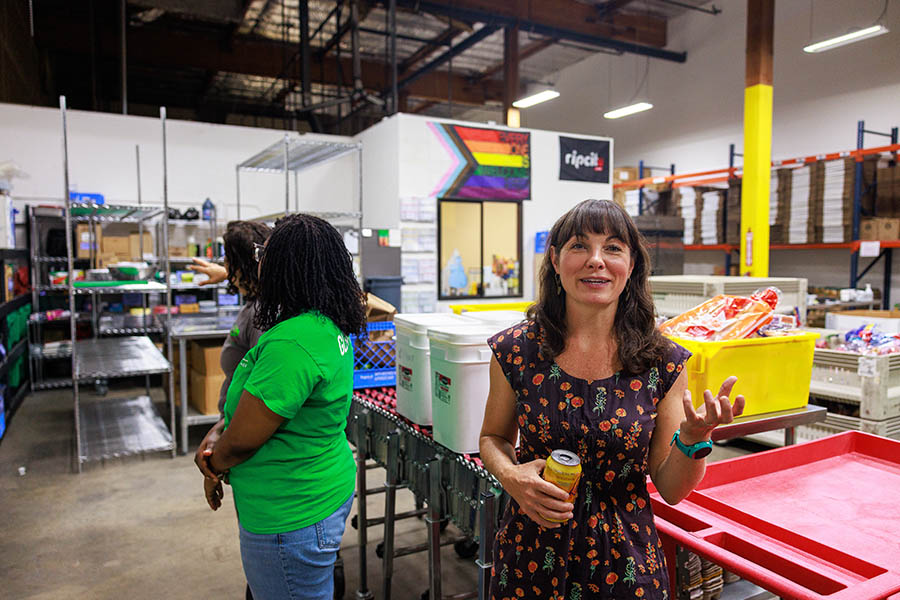
These curated, delivered groceries make a real difference for those with specific dietary needs. “I had someone with celiac disease tell me they used to only eat every three days because no one could accommodate their condition,” says Lift UP executive director Stephanie Barr.
Like all food banks, pantries and food-assistance organizations, Lift UP is seeing increased need. The organization grew 60% in the last three years in terms of people served and pounds of food distributed. “It’s been absolutely wild!” exclaims CaSaundra Johnson, Lift UP’s development manager.
In the face of all the growth, Lift UP felt this year’s federal freezes and cuts acutely and immediately. “We anticipated a 20% decrease from Oregon Food Bank,” says Barr, predicting that shortfalls would mostly affect fresh produce, dairy and meat, which she says are reliably the “hardest commodities to come by.” That 20% cut actually turned out to be 50%, trimming its 10,000 pounds of food delivered twice a week from Oregon Food Bank in half.
Those cuts came to programs in the Commodity Credit Corporation (CCC), a federally owned and operated entity founded to support domestic agriculture. In April USDA Secretary of Agriculture Brooke Rollins approved $1 billion in cutbacks to CCC programs. About half of the cuts, $500 million, hit The Emergency Food Assistance Program (TEFAP). The rest slashed the Local Food Purchase Assistance program (LFPA), which allows food banks to buy food from local farmers and ranchers. Both of those $500 million investments were made late in the Biden administration.
“The Local Food Purchase Assistance program has been a lifeline for communities across Oregon, investing nearly $7 million over three years in producers, food hubs and community-based organizations,” says Sara Cross, community food systems organizer at Oregon Food Bank. “This support has reached about 280 producers statewide — from the coast to Eastern Oregon — including Indigenous and Native producers, Black and brown farmers, rural and woman-owned businesses. Ending this funding means losing momentum on community-led solutions that strengthen both our economy and our shared food security.”
When asked for solutions to fill that gap, a USDA spokesperson offered this: “The Biden Administration inflated statutory programs with Commodity Credit Corporation dollars without any plans for long-term solutions, and even in 2024, used the pandemic as a reason to make funding announcements. And while the Biden-era TEFAP slush fund was terminated, the program continues to operate uninterrupted, as originally intended by Congress, with more than $298 million spent in recent months to connect families with food.”
This billion-dollar-shortfall may be devastating in the short term, but it is small potatoes compared to what the recently passed One Big Beautiful Bill will do to the Supplemental Nutrition Assistance Program (SNAP). The non-partisan Congressional Budget Office predicts that upcoming changes to SNAP benefits, like additional work requirements, will reduce participation by roughly 2.4 million people in an average month over the next 10 years.
The One Big Beautiful Bill also caps annual increases to benefits, effectively reducing them for everyone left participating. According to Feeding America, a national network of food-assistance programs, those reductions could eliminate the equivalent of between six and nine billion meals annually. Couple that with reductions in Medicaid — 89% of SNAP households in Oregon are also on Medicaid — and food banks across the state are gearing up for an influx of need.
“There’s no playbook for this kind of uncertainty,” says Carolyn Stein, executive director at FOOD for Lane County.
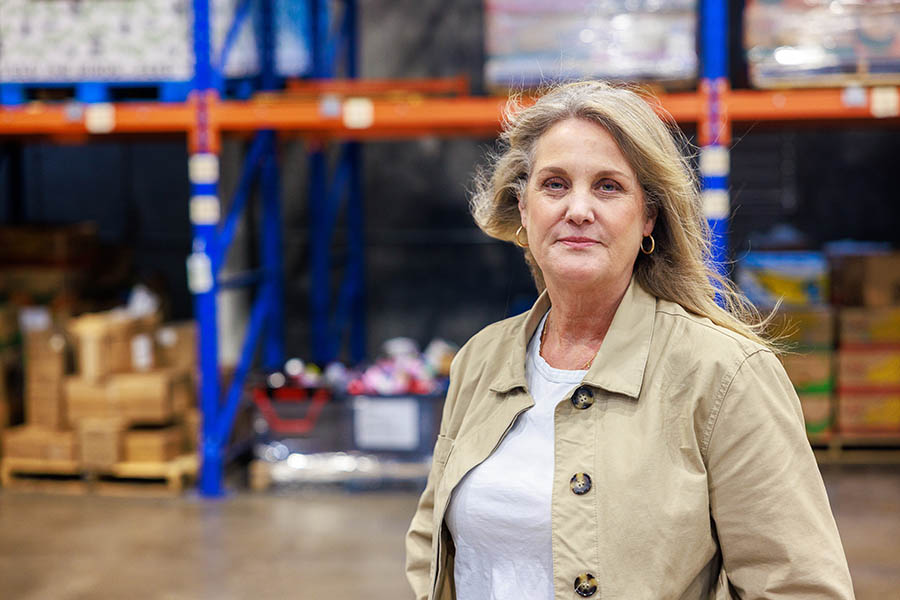
Yet play they must. More than 740,000 Oregonians use SNAP, and Stein reports that one in five people in rural communities depend on the service. Stein also points to an expected ripple effect across the economy, referencing a study that found that every dollar in federally funded SNAP benefits generates between $1.50 and $1.80 in economic activity.
Yet, as of this moment, FOOD for Lane County remains relatively well positioned. It already partners with local retailers and institutions like the University of Oregon. The organization also has two gardens from which it grows and distributes several hundred thousand pounds of food per year.
In addition, FOOD for Lane County receives grant funds through its two local Coordinated Care Organizations, PacificSource and Trillium Community Health Plan. “This money will allow us to purchase some level of food for the next two years. That’s great news,” says Stein, before acknowledging that the One Big Beautiful Bill is bound to affect these Medicaid providers.
Food-relief organizations throughout the state continue to live with this uncertainty while planning for the future. Food Share of Lincoln County just won a three-year, $60,000-a-year grant from Roundhouse Foundation to purchase food. While the relief is welcome, the organization still gets calls from local programs looking for food. Unfortunately, Mitchell has to turn them down.
“It’s hard for me to say we can’t onboard a new program, but we can’t,” she laments.
Still Mitchell continues to move forward. Last year Food Share of Lincoln County purchased a new, long-term home/warehouse that more than doubles its space. The new location includes more freezers and coolers, allowing the organization to do more.
“For the last five to 10 years, we have been focused on bringing in more fresh, healthy foods,” Mitchell says, “but limited space meant we had to turn some of our allocated and donated shipments away. Our new location will allow us to accept more perishables and dry goods and distribute bigger volumes of food.”
After raising about $3 million for renovations and repairs, of course. Mitchell predicts the entire fundraising process will take about three years, with a ribbon cutting expected in early 2028, “unless there’s a miracle.” (We’re looking at you, MacKenzie Scott.)
The team at Lift UP also remains somewhat optimistic. Working with a web of partnerships outside of the Oregon Food Bank, the nonprofit remains “better positioned than many of our peers,” according to Cecilia Estraviz, operations manager. Its programs reach far and wide, including a Grow to Donate campaign, where people commit to donate extra produce from their garden, fruit trees or CSA share.
A small-bore solution for sure. Yet “it gives the community something tangible to do when everyone is feeling powerless as systems break down,” says Johnson. “It connects the public to the deeper issues around food as well.”
It also might be a way forward. “The systems that are breaking down will not be coming back together in the same way,” says Barr. “Our long-term vision is to build a more localized, more resilient food system. We need to view this moment as an opportunity.”
To that end, Lift UP is planning a feasibility study with Portland State University’s Master of Urban Planning students to assess what it would take to build a farm-to-food assistance hub for the west side. “The LFPA cut is a disinvestment in our farming community. It’s in our collective interest to have a market for them,” says Barr.
Stein, at FOOD For Lane County, also remains optimistic. “We don’t have time to sit back. We have to keep working, finding partnerships and developing new ways to come together. I believe very strongly in our community.”
Click here to subscribe to Oregon Business.