
A $290 million proposal containing several tax increases now heads to the Senate for approval.
Two months after the 2025 legislative session ended in frustration, Oregon lawmakers on Monday narrowly approved a plan to raise billions for roads and public transit.
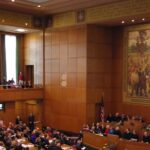
House Bill 3991 squeaked through the House of Representatives by a vote of 36 to 12, with one Republican joining Democrats in support and one Democrat joining Republicans in opposition. The bill awaits a vote in the Senate, where Democrats hold an 18-12 advantage.
In Oregon a three-fifths “supermajority” is required to raise taxes, meaning Democrats needed every vote. In the end, one Democrat left party ranks, but Rep. Cyrus Javadi (R-Tillamook) opted to cross the aisle. During the 2025 legislative session, Javadi’s first as an officeholder, he established a reputation as a moderate willing to side with Dems on contentious issues, according to Oregon Public Broadcasting.
Javadi explained his vote as necessary to his coastal district, which is subject to harsh weather and worsening infrastructure.
He acknowledged the vote could cost him his seat.
“I think my job’s worth the handful of jobs it’s going to save in Astoria if it comes to that,” he’s quoted as saying, “or the hundreds more it’s going to save across the state.”
Gov. Tina Kotek called a special session of the Oregon Legislature to avoid hundreds of layoffs at the Oregon Department of Transportation. To fund road and bridge maintenance and complete major transportation upgrades, the governor has proposed raising the gas tax, vehicle-registration fees, and employee payroll taxes and other options. In June a bill similar to HB 3991 failed in the 11th hour of the 2025 legislative session, as did a smaller stopgap funding proposal, as Democrats failed to fall in line.
The special session, gaveled in on Friday, got off to a bumpy start with fears of a lack of quorum. Once the body convened, the governor’s initial, far more ambitious funding package was shot down, and a new bill that would raise $4.3 billion in its first decade proved more popular.
Under the current version of the bill, the state payroll tax would double from .1% to .2% for two years, and the bill contains a number of other tax increases as well. It would raise Oregon’s 40-censt-per-gallon gas tax to 46 cents. Vehicle-registration fees would increase by $42 and titling fees by $139. Electric-vehicle owners would be required to pay a $30 fee.
Under the bill, ODOT would also receive more frequent auditing and legislative oversight.
Democratic Rep. Annessa Hartman of Gladstone explained her “no” vote saying that her voters oppose higher taxes and poor management at ODOT, which is prepared to lay off 500 employees by the middle of the month without additional funding.
Republicans assailed the proposal, saying money should be pulled from other sources such as climate initiatives, public transit, and bike and pedestrian projects. In a statement following the passage of HB 3991, Republican House Minority Leader Rep. Christine Drazan said Democrats “made a choice to harm Oregon families and workers on Labor Day weekend.”
“I can’t even believe we’re doing it,” said Rep. Drazan, R-Canby. “I cannot believe that today we are coming into the chamber to double the payroll tax on Oregon workers.”
Democrats have argued the tax increases are necessary to avoid worse outcomes that would result from an expected $290 million budget shortfall that ODOT officials say will force the agency to lay off around 10% of its workforce and close numerous maintenance stations around the state.
The bill is expected to receive a vote in the Senate on Wednesday.
Click here to subscribe to Oregon Business.