

As Trump withholds crime dollars to blue states, the small Beaverton-based nonprofit was forced to close its 24/7 victim hotline.
It’s not the only 24/7 victim assistance hotline in the world. But for the thousands of victims who’ve made the confidential call to Oregon’s Sexual Assault Resource Center over the years, it’s been a lifeline.
And that lifeline, at least for the moment, is closed.
This week the 45-year-old Sexual Assault Resource Center closed its anonymous victim hotline after losing around half its budget, though executive director Brandy Selover tells Oregon Business the hotline and other services should return next week, though in diminished form.
To be sure, SARC is far from alone. In April Reuters reported the Department of Justice had canceled grants with at least 365 agencies and organizations around the country. This funding had maintained services from mental health treatment for police officers to support for victims of sexual and domestic violence.
“Grants for programs that do not align with the administration’s priorities were rescinded, but this Department of Justice will continue to ensure that services for victims are not impacted, and any recipient will have the ability to appeal and restore any grant if direct impact on victims can be thoroughly established,” Attorney General Pam Bondi said in a statement in April.
In Oregon 150 organizations that support crime victims lost most of their federal funding. Counties around the state have lost victim advocates, hotline call takers and support workers for abused children.
Founded in 1977, the Sexual Assault Resource Center provides support to victims of sexual assault through its confidential hotline, hospital accompaniment and other services. Entering the year, its budget was $1.1 million. It saw that reduced to $580,000. Nearly all staff were furloughed and most services were halted, including SARC’s 24-hour phone line (which last year handled around 2,000 calls) and victim accompaniment at hospitals (about three to four visits per week). The organization employed 25 staff members — eight full-time employees and 17 paid on-call advocates. Now, in light of cuts, SARC is limping on with a reduced staff of four employees and no on-call advocates.
Part of this was expected. SARC has traditionally received a sizable chunk of its budget from the Victims of Crime Act (VOCA), which is not taxpayer-funded but instead funded by financial penalties imposed by federal courts. And since around 2017, VOCA funding has diminished nationwide, leading SARC and other victim organizations to look for permanent alternatives.
A larger chunk of VOCA money was tied to conditions that state and local governments comply with Trump’s immigration policy. This prompted Oregon Attorney General Dan Rayfield and 20 other AGs to file suit against the federal government.
A coalition of district attorneys and social welfare organizations fought to convince the Oregon Legislature to backfill the $18.5 million in lost federal funding for victims of crime. But in the end, lawmakers approved only $5 million of the $10 million requested by domestic and sexual violence programs to fill the budget gap.
All this led to a situation earlier this week in which SARC’s executive director, Brandy Selover, found herself closing public access to SARC’s website.
“We don’t want folks to try to access services that aren’t currently offered,” she explained.
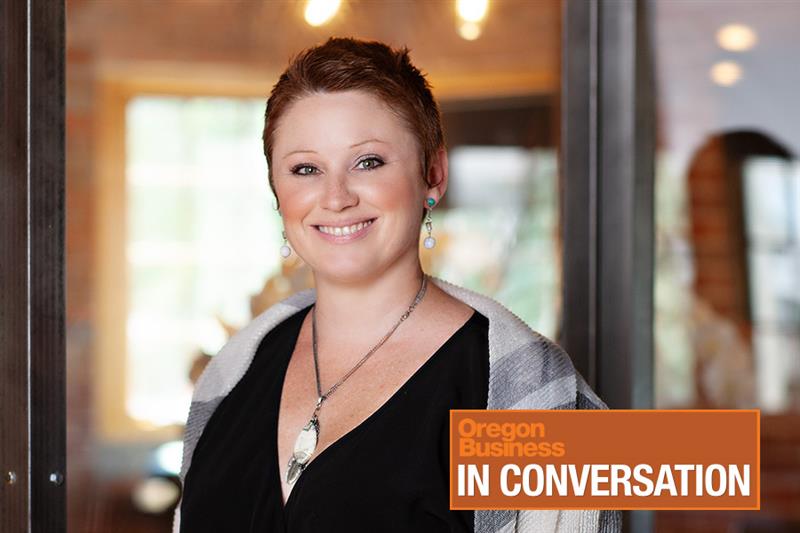
Selover met this week with Oregon Business at SARC’s nondescript administrative offices in Beaverton’s Family Justice Center of Washington County, where she discussed rebuilding SARC’s capacity with limited resources and how she feels now about Oregon defying Trump with its “sanctuary” status.
This interview has been edited for length and clarity.
Your website is down. The 24-hour line is down. What’s the latest — what’s going on?
On August 13, I implemented an emergency pause to our services because of significant funding cuts at the state and federal level, and uncertainties. That means that all of my staff, besides myself and my operations director, went on furlough. And that also means that we had to shut down a 24-hour support line, hospital accompaniment, advocacy for housing and other supportive services for Washington County for the time being.
We received information yesterday that our budget is now looking to be around $580,000, which is good news in the whole scheme of things, because we’ll be able to return some core services as of next week. But that is still, effectively, a 45% cut in our normal operating budget.
What have your days been like these past few weeks?
There’s been a lot of community-based meetings. We’ve had to ensure that those relationships are able to continue and endure. And I’ve been working on identifying what it looks like to reorganize a small nonprofit.
One of the key things for us, and I would say a primary focus, is that in order to qualify for certain funding that comes through the state, we have to show that we’re doing certain core services. So I’ve had to identify how we reorganize our organization to ensure that we can do those core services so that we remain eligible for basic funding.
Assuming you’re able to rebuild capacity to some degree, how challenging is it to bring back people and services after they’ve been cut?
I think it’s multifaceted. I’ll focus on advocate accompaniment at hospitals.
Number one, it impacts long-term relationships that we’ve forged with our community partners at Providence, for instance, or other hospitals. And unintentionally, it leads to folks not being able to trust that the services that they need are going to be available when they need them. So this damages that relationship, and it takes a while to get that going again.
And also, with the layoffs of our on-call advocates, there’s been a lot of time and monetary investment in them. But there’s also the relationship investment with those folks. And they truly believe in the mission and support for survivors. And once we end a relationship like that, it takes a while to get those folks back.
I want to ask about real-world effects of cuts at SARC. Will crimes go unprosecuted? What are some of the potential outcomes?
Well, I can’t really speak to whether crimes will go unprosecuted, but I would say that the support that confidential advocates provide for survivors through the justice system is just vital, because we hold victim-advocate privilege. That means we don’t work for systems. We aren’t mandatory reporters. And so there’s trust built into our relationship with a particular survivor, especially a survivor who has historically not had good experiences within the criminal justice or health and human services realm. They know they can come in and see us and still receive the support they need without having to report to police or something like that.
I’ve noticed more and more that words like “rape” and “sexual assault” are being replaced with euphemisms or deleted all over social media. What’s happening with that? Is there a consciousness-raising going on about the power of those words?
Yeah, and there’s also the capability of AI to recognize those particular words and flag certain posts. I’ve seen that, and I’ve seen not only changing terminology but a lot more conversation around sexual assault within social groups on various social platforms. They’re also talking about sexual violence in broader terms as opposed to just an assault, and recognizing that sexual violence is really on a spectrum.
The president himself is an adjudicated rapist and a convicted felon. Do you think there’s been a normalization of sexual assault to some degree?
I think that there has been a normalization of apathy around gender-based violence and further marginalization of people who experience multiple levels of oppression every single day. We hear that expressed by folks who seek our services and other people connected with our organization.
I’ll say right after the election in November, we saw a decrease in calls. And then it seemed to pick up again between December and the first part of January. And then immediately after the January 20 swearing-in of the president. And it was really clear the direction we were going — we saw another drop in folks reporting sexual assaults at the hospital. So they weren’t coming to the hospital, but we still had folks calling us, because the calls are confidential. But they weren’t showing up at the hospital in the same numbers that we’ve seen in the past.
How do you feel about the state of Oregon digging in and not abandoning its sanctuary status, even though it appears to have hurt your organization?
Well, this is my personal opinion: I am absolutely thrilled that the attorney general is taking this approach and indicating that Oregon as a whole is not going to be bullied over this.
I’ll also say that our organization joined a lawsuit by a coalition of state domestic and sexual violence coalitions. The issue involves federal funding applications with “unallowable activities” listed that precluded organizations like ours from even applying for that funding, which typically would have been open to us. But the unallowable activities were such that it would absolutely, completely compromise our values and the way we understand the dynamics of gender-based violence.
Our organization has a track record of supporting folks who stand up and fight the type of policies that the federal administration is trying to implement.
Click here to subscribe to Oregon Business.